
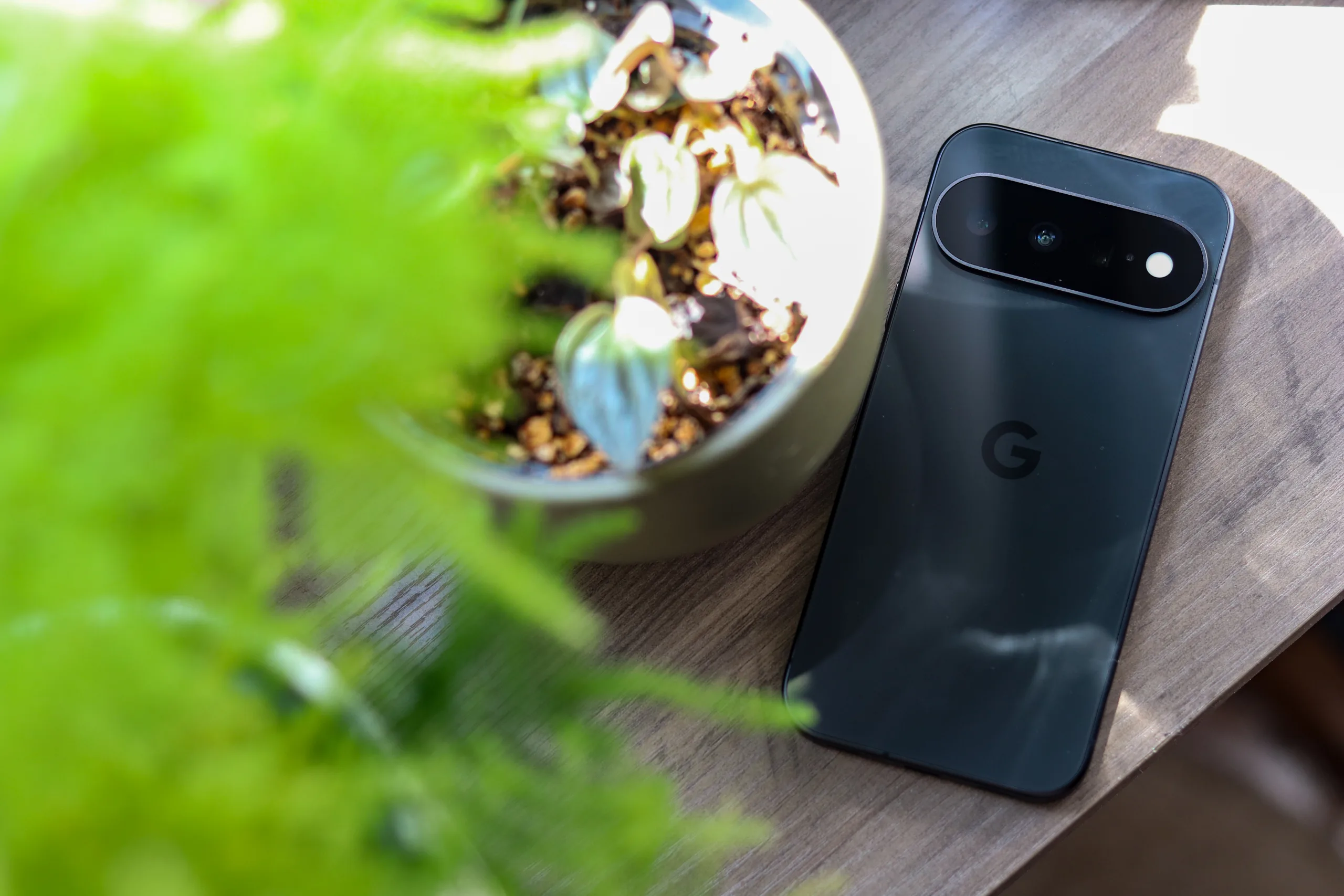
The new Google Pixel 11 didn’t draw as much attention at launch as the Pro versions because it looked too similar to last year’s model. However, the differences are there and they are significant.
With practically the same hardware, the Google Pixel 11 seems to be the same but offers a lot of different things when we look at the final result.
The general features of the Google Pixel 11

With many things in common with last year’s Google Pixel 10, the Google Pixel 11 might not surprise consumers when they only look at the numbers on the spec sheet, but the truth is that, when we put everything together, we have significant differences in the final result.
In terms of dimensions, we are talking about 152.8 x 72 x 8.6 mm with a total weight of about 197g, which makes it the smallest and lightest of the new Google Pixel smartphone family. The back is made of glass, but in this model we don’t have the matte finish like in the Pro versions, making it an absolute fingerprint magnet.

As for the numbers, the Google Pixel 11 features a 6.3-inch Actua display with OLED technology and a variable refresh rate of up to 120Hz protected by Corning Gorilla Glass Victus 2, which can reach a maximum brightness of up to 3000 nits.
Inside the Google Pixel 11, we find the new 3nm Tensor G6 processor with the Titan M3 security coprocessor, accompanied by 256 or 512 GB of internal storage with 12GB of RAM. In the case of the 512GB version, the smartphone has Zoned UFS for faster performance.
In terms of cameras, the Google Pixel 11 has a redesigned module, now completely made of glass for a design more aligned with the whole range, integrating a 48MP main camera with an f/1.7 aperture, a 10.8MP telephoto with an f/3.1 aperture, and a 13MP ultra-wide angle with an f/2.2 aperture. On the front, we also find a 10.5MP camera with an f/2.2 aperture.

Powering all this is a 4985 mAh battery that features fast charging, allowing up to 55% charge in about 30 minutes with a 30W or higher USB-C charger. In addition, it supports up to 25W wireless charging via Pixelsnap.
The new Google Pixel 11 is prepared for all the features offered by Gemini Intelligence and will receive updates for 7 years, starting natively with Android 17.
The Google Pixel 11 can be purchased with a starting MSRP of 1019€ in the colors Lilac Ice, Pistachio, Hibiscus, or Obsidian.
It seems to be the same, but when we use it, it’s quite different
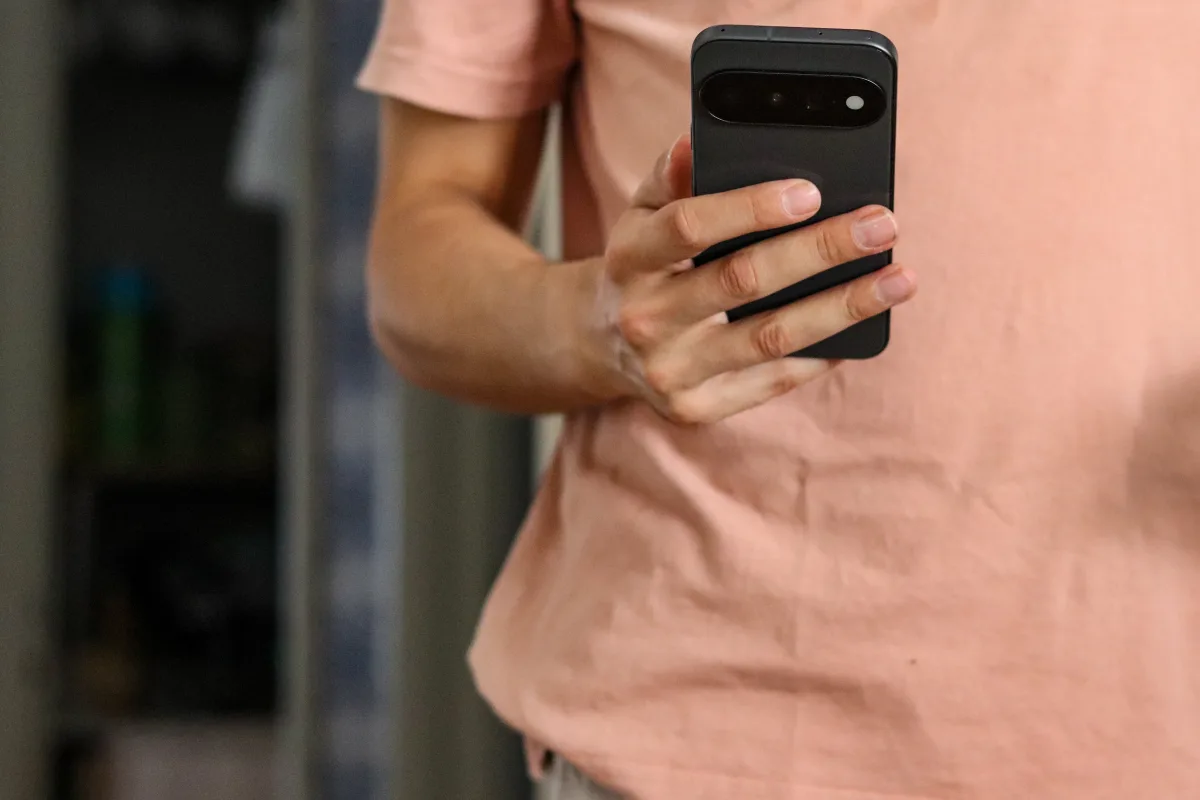
We can’t explain very well what has changed, but the first time we hold the Google Pixel 11, it feels like we are holding the Google Pixel 10, but now with an all-glass camera module that is a bit smaller.
However, when we start using it, it feels like a completely different smartphone. The system responds better, the features are more polished, and the device itself feels different in the hand, but we can justify this with the fact that, although the dimensions remain the same, the weight has dropped from 204g to 197g.

Other than that and the updated processor, we are talking about the same OLED screen with a 120Hz refresh rate and a maximum brightness of up to 3000 nits, the same Corning Glass Victus 2 protection, a very similar camera system, and a slightly larger battery.
Even in terms of one of the standout features of the new range, Pixel HiLigh, the new Google Pixel 11 does not integrate this feature, making it extremely similar to last year’s model. This is both a positive and a negative point.

Although we have no complaints about keeping the vast majority of the previous model’s features, the new Google Pixel 11 ends up being less appealing to consumers who don’t investigate the device more deeply, leaving the spotlight only for the new Pro models.
However, we gain a lot with the new base model, for cases where the consumer isn’t looking for a top-of-the-line device but still wants to be very well served.
The same camera, but different
Numbers can be deceiving, and in the camera department is where this factor will most influence the results obtained.
The new Google Pixel 11 has the same 3 rear cameras with the same resolution and the same aperture. However, if we look at the numbers more deeply, we see that they are not exactly the same cameras and the final result, in fact, shows that there are subtle differences between the two models.


The cameras on the new model can offer sharper and more detailed results, with even better image processing than what Google had accustomed us to in the previous model.
We’ve reached a point where the numbers presented on the cameras don’t always mean that the final result will be better, and Google, in particular, has always been very good at proving that numbers do not make the final image.
With the main camera numbers being the same, the Google Pixel 11 manages to improve the final result by offering even better-crafted and more detailed photos, with perfectly balanced colors and whites, as well as saturation levels.


The final result, during the day, is that we manage to have images ready to share, with well-crafted detail and an overall balance that is extremely pleasing to the eye, ready to be shared on any platform without the need for editing.
Furthermore, the night mode is faster and more effective, with photos ending up with well-achieved detail, a very present sky, and an even better-controlled handling of light sources without extreme glare from street lamps, for example.


The new processor actually helps with this issue, since we need less time to capture a night image which, for those who don’t have the steadiest hands on earth, is always a bonus.
The 30x Super Zoom might be useful for some people, but generally speaking, we’ve never been the biggest fans of this type of zoom. It’s good to have it when needed, but these are not photos meant to later be used for social media or any kind of sharing.


Although the work done by Google is commendable, especially considering this is the base model of the range, the photos are nowhere near being of superior quality, which somewhat limits the use of these images.
Generally speaking, it doesn’t pay off at all to upgrade from a Google Pixel 10 to a Google Pixel 11, but the truth is that there are differences and, without a doubt, those differences can be seen right in the first photo taken with the new smartphone.
An all-day battery, with a size that fits comfortably in your pocket
Although Google’s base models have never been difficult to carry in a pocket, the Google Pixel 11 continues to offer this extra point compared to the Pro models (especially the XL model) without neglecting the fact that the user needs energy for a full day of use, whether it’s more intensive or more moderate.
Keeping the compact size and with a lighter weight, the Google Pixel 11 easily fits into any pocket without weighing too much and maintains a very good battery life.

It’s not a smartphone for constant gaming; although it holds up well, gaming and high screen brightness end up consuming a lot of energy from the 4985 mAh battery. However, with normal use, it ends up lasting very well.
Whether on days when we rely more on the camera and entertainment, or on quieter days with just normal day-to-day activities, the Google Pixel 11 proved capable of easily lasting a full day without any problems.

Faster charging is always welcome, but since we always end up leaving it charging overnight, there’s no rush on our end to gain extra energy during the day. However, if necessary, we can get up to 55% of power with about 30 minutes of charging via USB-C cable.
Internal improvements that are not noticeable on the outside
Although the Google Pixel 11 is improved in several areas, seen from the outside it looks exactly like last year’s smartphone.
However, we have to give Google extra points for managing to offer even more inside the same body, without leaving out anything relevant.

Of course, the fact that the HiLight feature isn’t integrated into the Google Pixel 11 is something that confuses us a bit, since it’s one of the standout points of the 2026 lineup, but we also understand that there must be differentiating factors for the Pro models.
The slightly larger battery manages to offer even more autonomy and keep up with the new Tensor G6 without limiting the user’s experience, always managing to reach the end of the day with about 30/20% of energy, depending on how the device is used.
We still aren’t the biggest fans of glossy glass backs, as it ends up forcing the user to constantly clean the smartphone so it doesn’t look dirty, but the construction and finishes are nonetheless very well made and elegant on the smartphone.

The “new” camera module goes beyond the visual difference and manages to improve the photos taken by the smartphone even further. Generally speaking, we have more detail and a more precise, true-to-life enhancement with the new Google Pixel 11. The colors are balanced and not overdone, with a pleasing saturation to the eye, and when the outdoor light starts to dim, we still manage to get excellent photos.
The skies gain some life and the colors of everything around us are maintained despite the tint of the surrounding artificial lighting.
Overall, we can say that the Google Pixel 11 is an extremely complete smartphone for the vast majority of those looking for a flagship device, without compromising any of the main features compared to the Pro models. It has its differences, obviously, but these only become relevant for those who are truly looking for the very best that Google has to offer.

For those who have the Google Pixel 10, you might not feel major differences if you make the switch this year, but for older models, it will be a good leap that can be made with confidence.
The Google Pixel 11 can be purchased with a starting MSRP of 1019€ in the colors Lilac Ice, Pistachio, Hibiscus, or Obsidian.

- Good battery life for a full day of unrestricted use
- Improved cameras
- Strong processing performance
- Comfortable to use
- Missing the HiLight feature found on the rest of the range
- Glossy back is a fingerprint magnet
We thank Google for providing us with the Google Pixel 11 for review.
Sobre o autor

Aproveite a campanha:


