
HUAWEI has today officially launched one of the most complete health monitoring solutions available, including cardiovascular tracking.
After the Huawei Watch D2 became the first medically approved smartwatch for measuring blood pressure, the Chinese brand has now released an updated and improved version with more features.
 Fonte preferida
Read our review and experience with the new HUAWEI Watch D3 smartwatch.
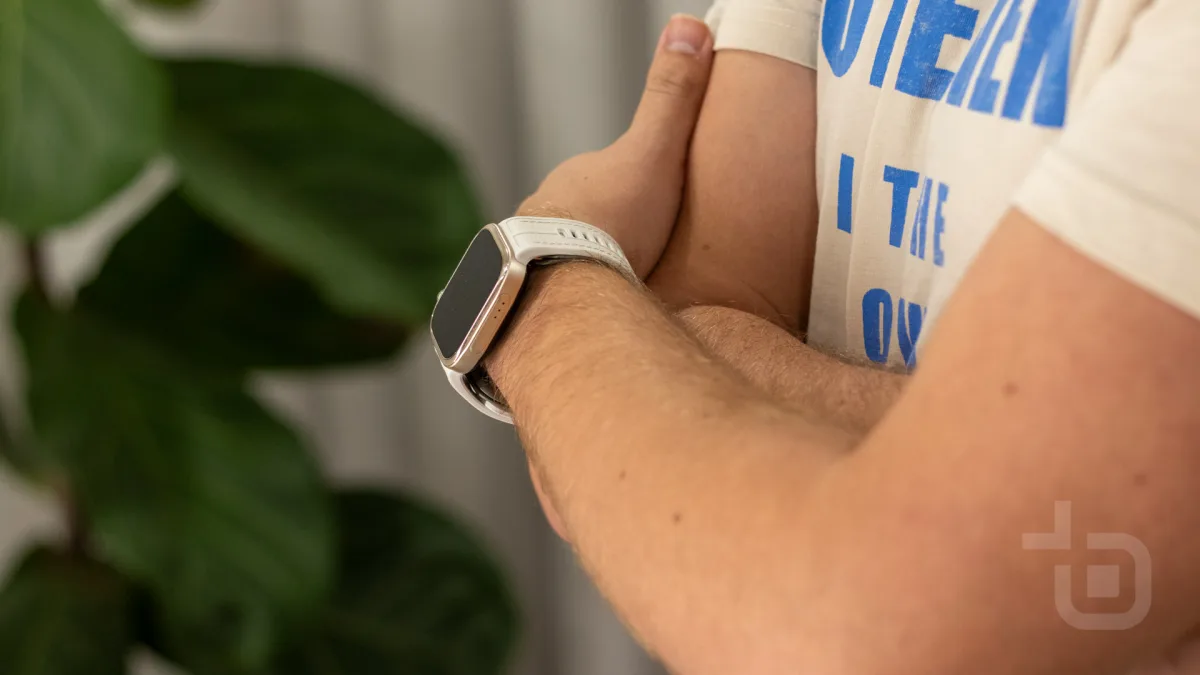
We tested the HUAWEI Watch D3 – A watch that measures blood pressure like a traditional monitor
Measuring blood pressure has always been a separate task. An arm cuff monitor stored in a drawer, a dedicated moment to sit quietly, and all too often a reading taken only when something already seems wrong.
The HUAWEI Watch D3 aims to change this routine by bringing that measurement to the wrist, without the watch looking like a medical device.
Aproveite a campanha:

The key difference from most smartwatches is that blood pressure is not estimated using optical sensors. The Watch D3 has a small air pump and an inflatable cuff built into the strap that compresses the wrist in a similar way to a traditional blood pressure monitor, and holds CE MDR certification as a medical device for this function.
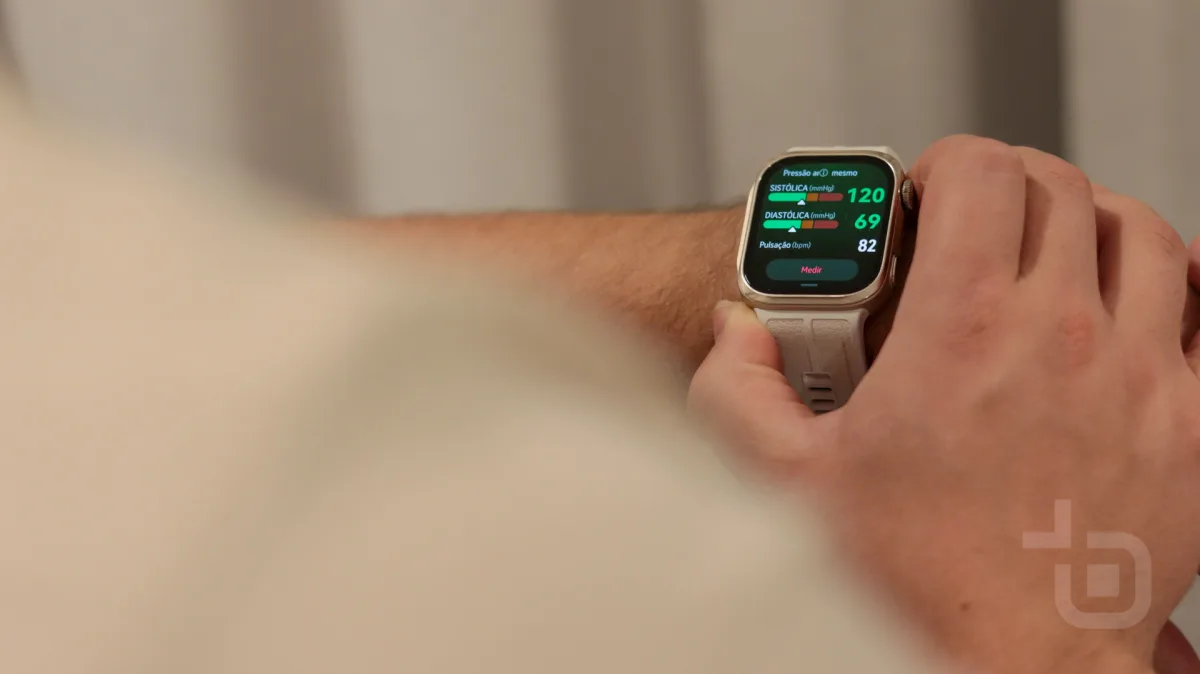
At 11.3 mm thick and 75 g, it is slimmer and lighter than its predecessor.
Beyond on-demand readings, the watch allows continuous blood pressure tracking over 24 hours, measurements before and after exercise, and smart reminders that adapt to changes in temperature and altitude.
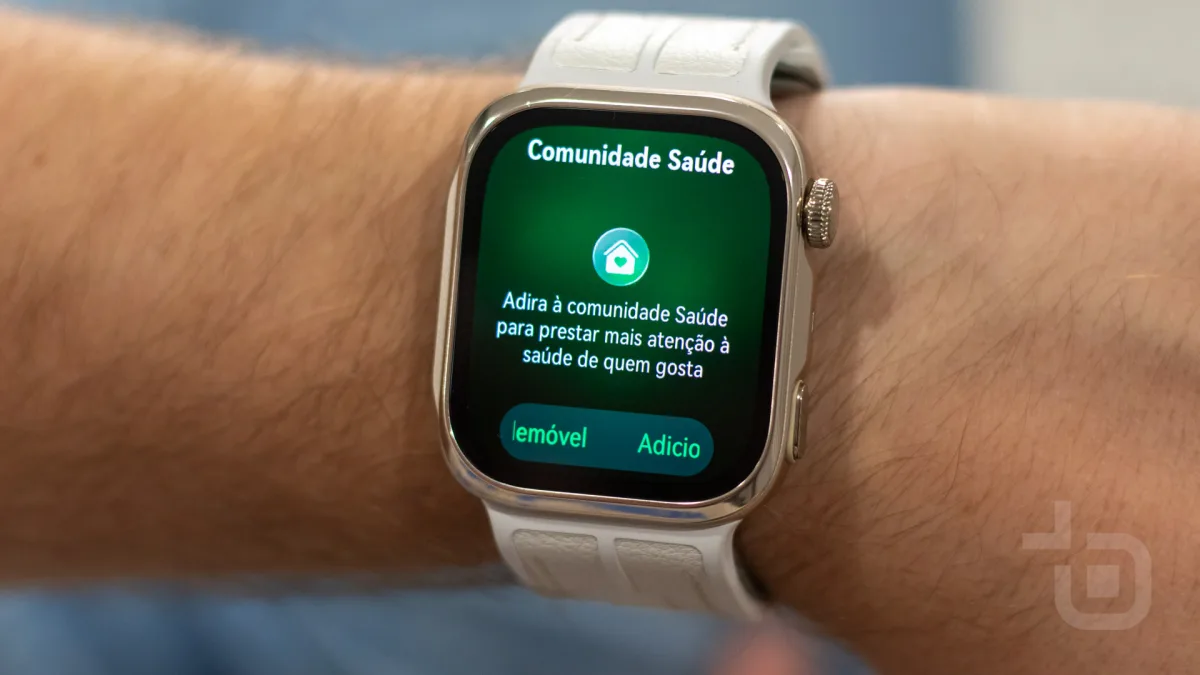
It also includes Health Glance, which brings together 11 health indicators in 60 seconds, and a family health community for keeping an eye on the data of those who matter most.
The HUAWEI Watch D3 is available in Portugal for €449.

Design and build quality
HUAWEI has not changed the design of the Watch D3 significantly from its predecessor.
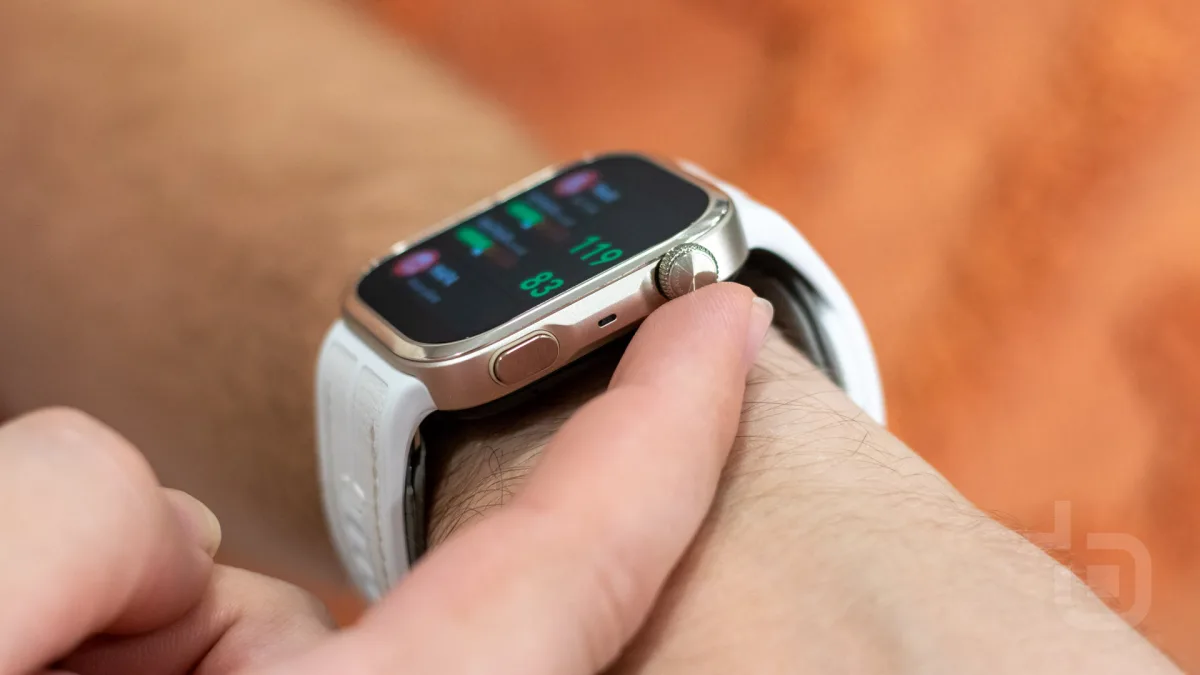
It retains the rectangular display with a crown and secondary button with an electrode on the right side, now adding a slight protrusion between the two buttons to house a microphone.
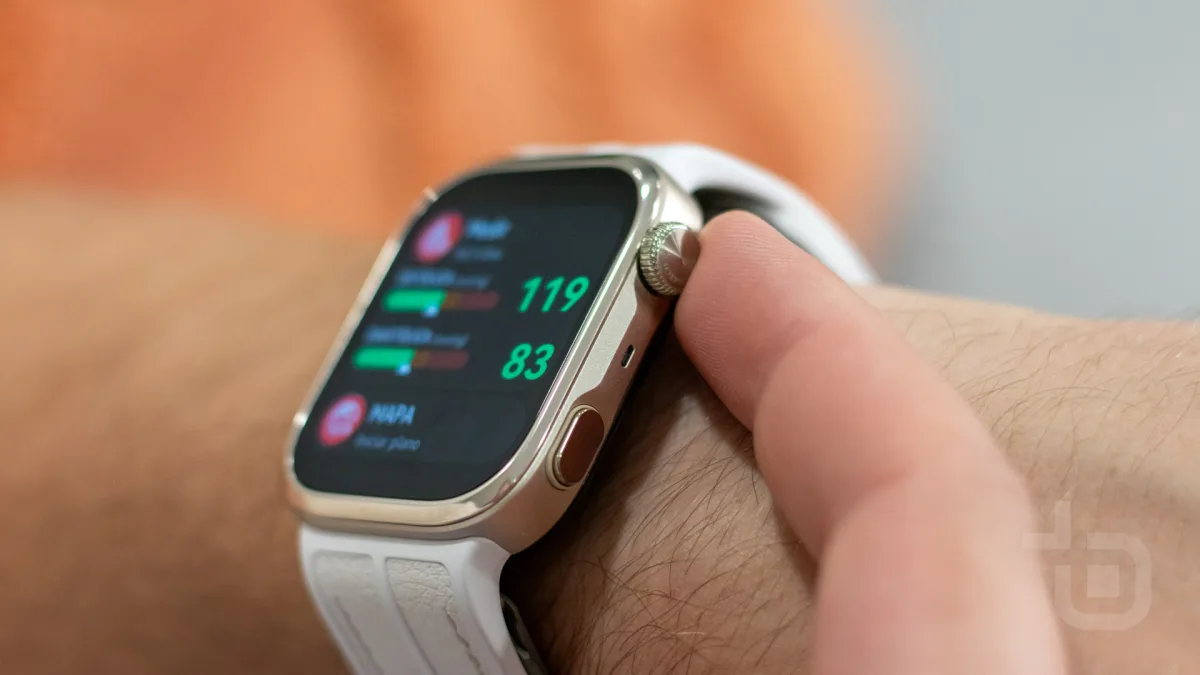
The display has grown slightly, offering a larger viewing area and higher peak brightness.
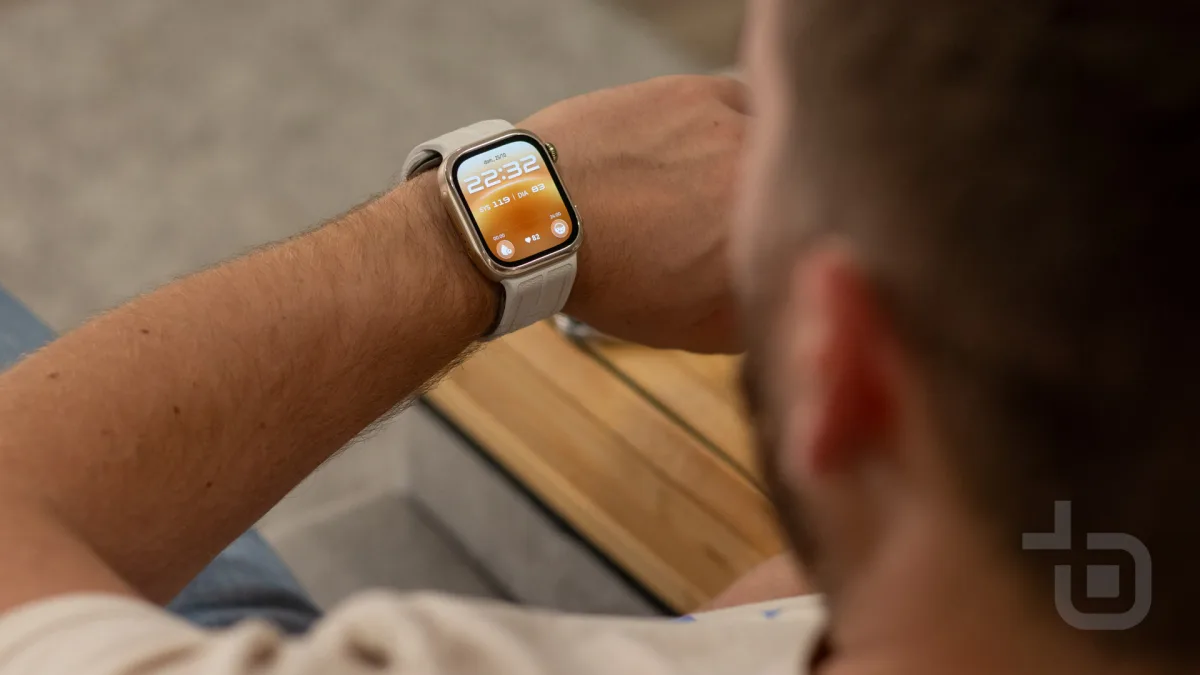
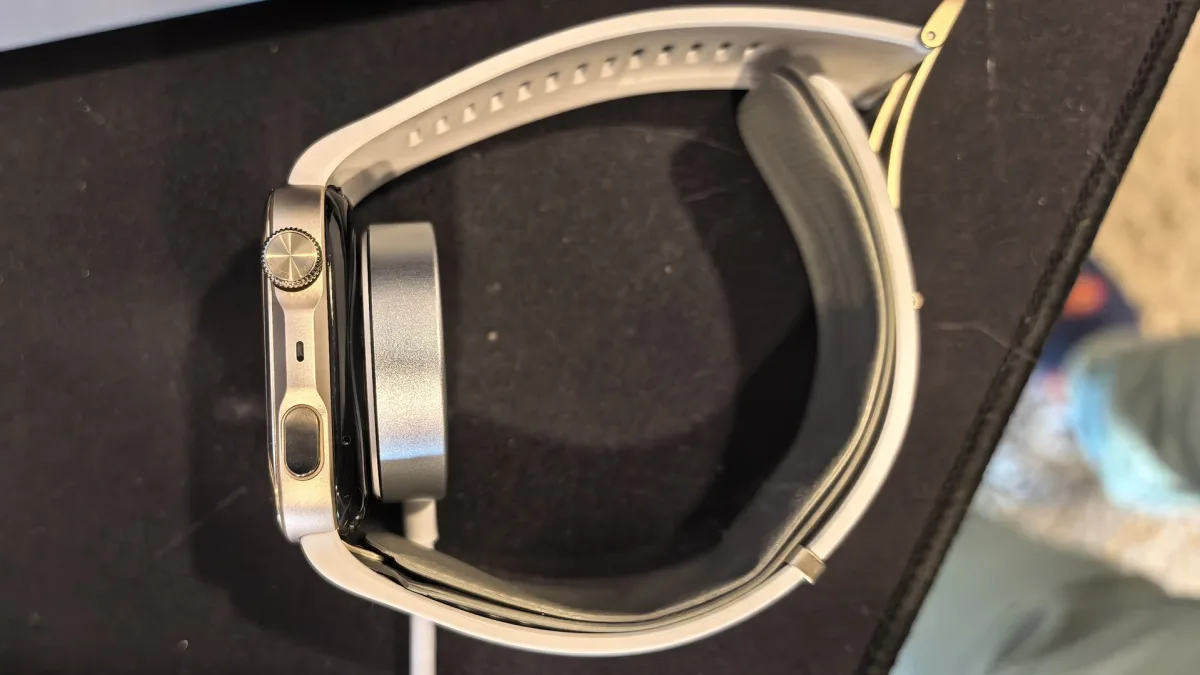
On the back, it retains the same sensor type with magnetic charging.
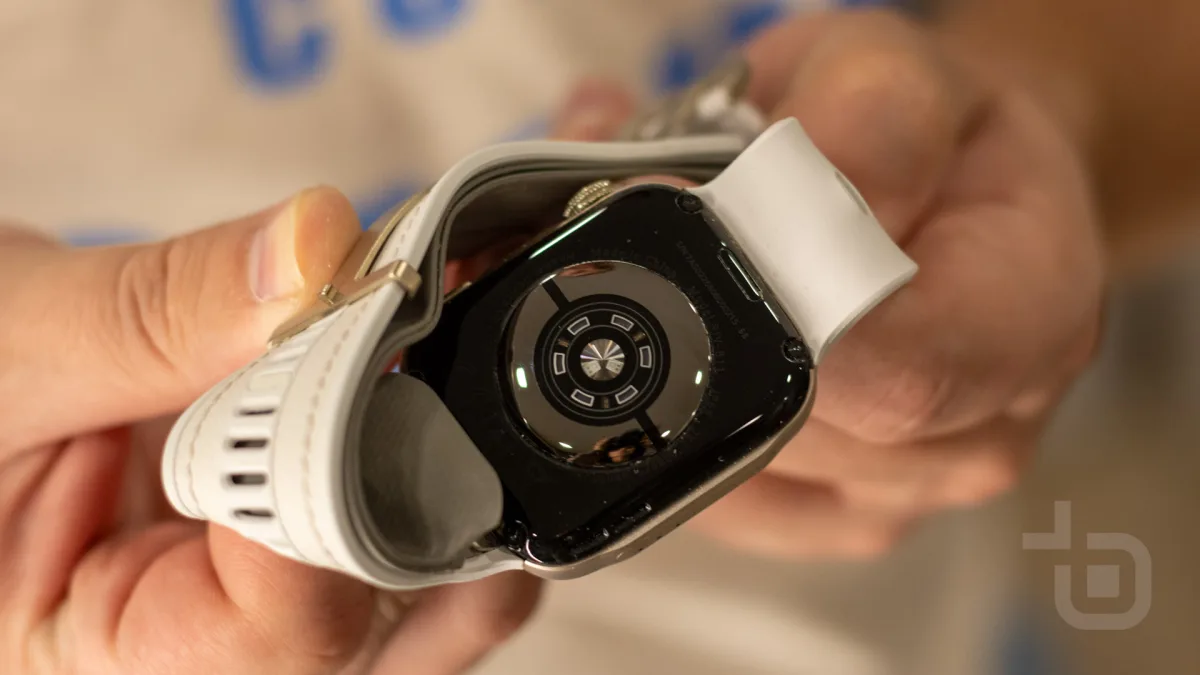
The strap is made from white composite leather with a soft finish and gold-tone details. In the black version, the strap is made from HNBR (Hydrogenated Nitrile Butadiene Rubber).
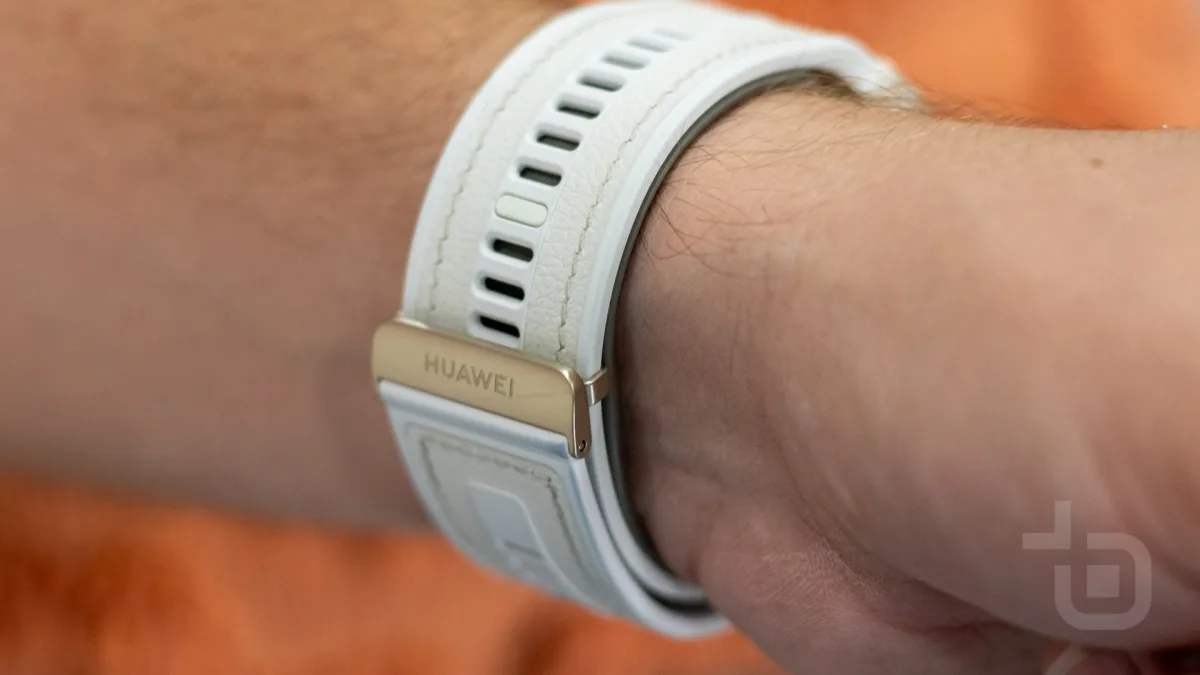
The HUAWEI Watch D3 is now lighter and slimmer, making it more comfortable to wear.
In terms of aesthetics, while the black version may have broader unisex appeal, the watch was generally perceived as having a more feminine look.
In day-to-day use, the smartwatch proved comfortable and practical to wear. We never felt our wrist strained or constricted, making it very easy to wear regularly.

Improvements over the HUAWEI Watch D2
Although the two models look very similar, HUAWEI has made some meaningful improvements with the new Watch D3.
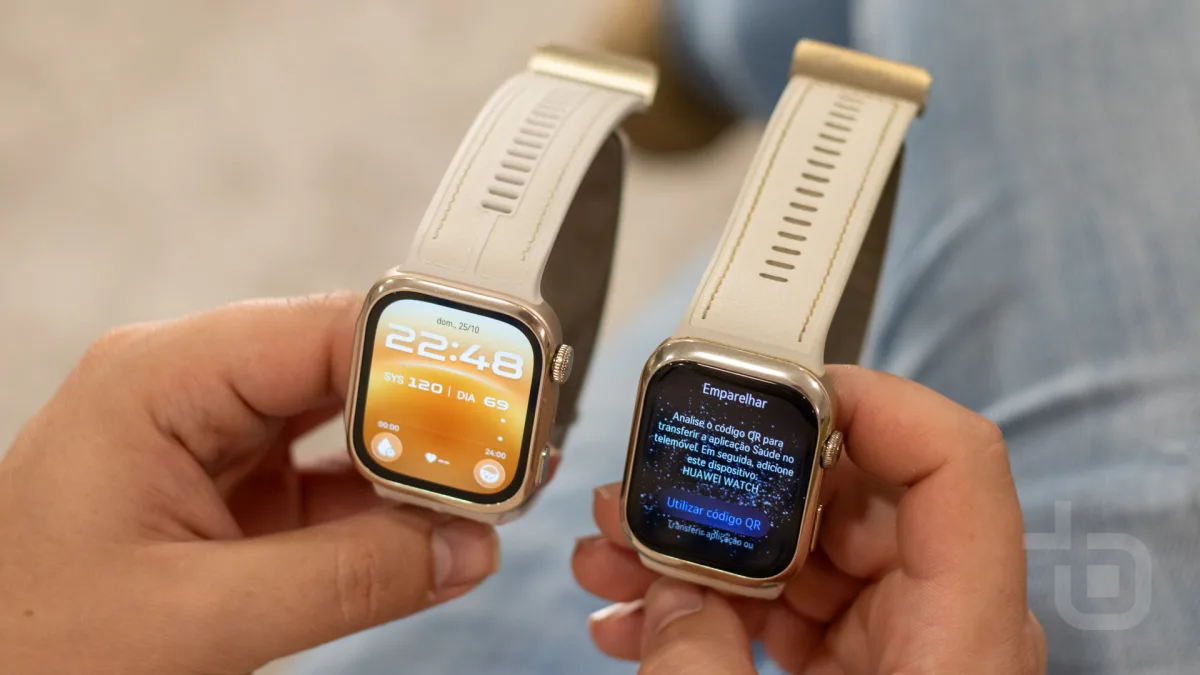
As well as being 9 grams lighter and 2 mm thinner, the display has grown to 1.92″, increasing the screen-to-body ratio by 6.4%.
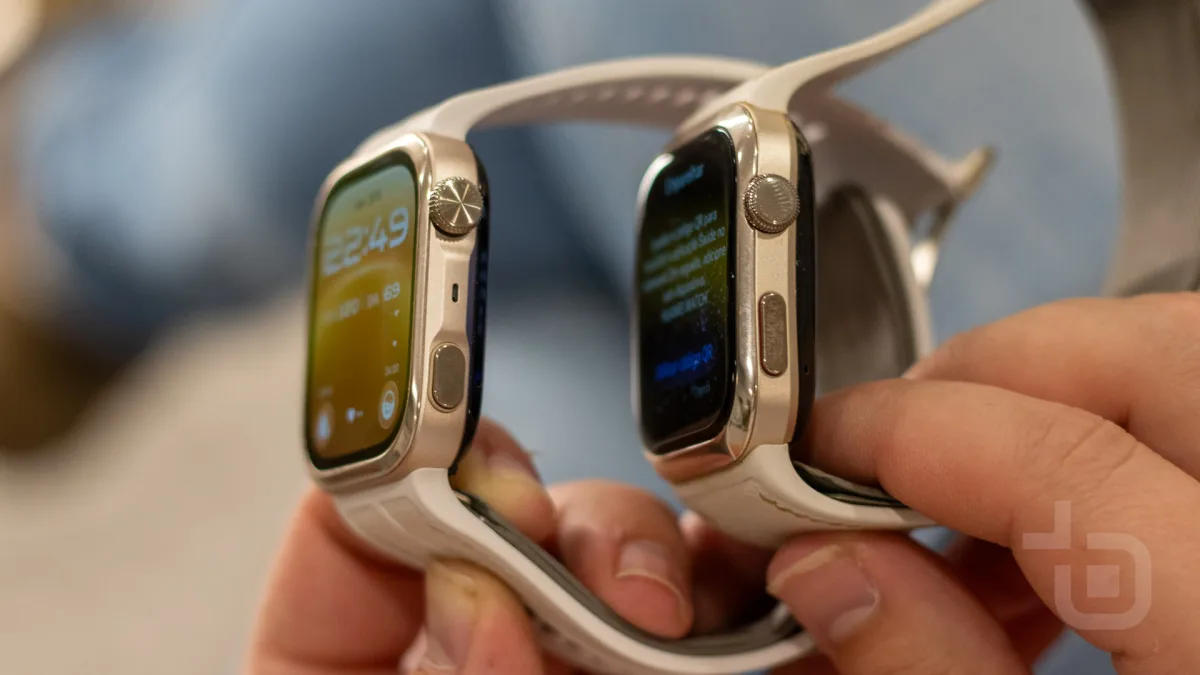
That same display is now more legible, with peak brightness doubled to 3,000 nits.
Beyond the medically validated blood pressure measurement, the Watch D3 is now also certified for pre- and post-exercise readings to monitor cardiac performance and identify potential issues.
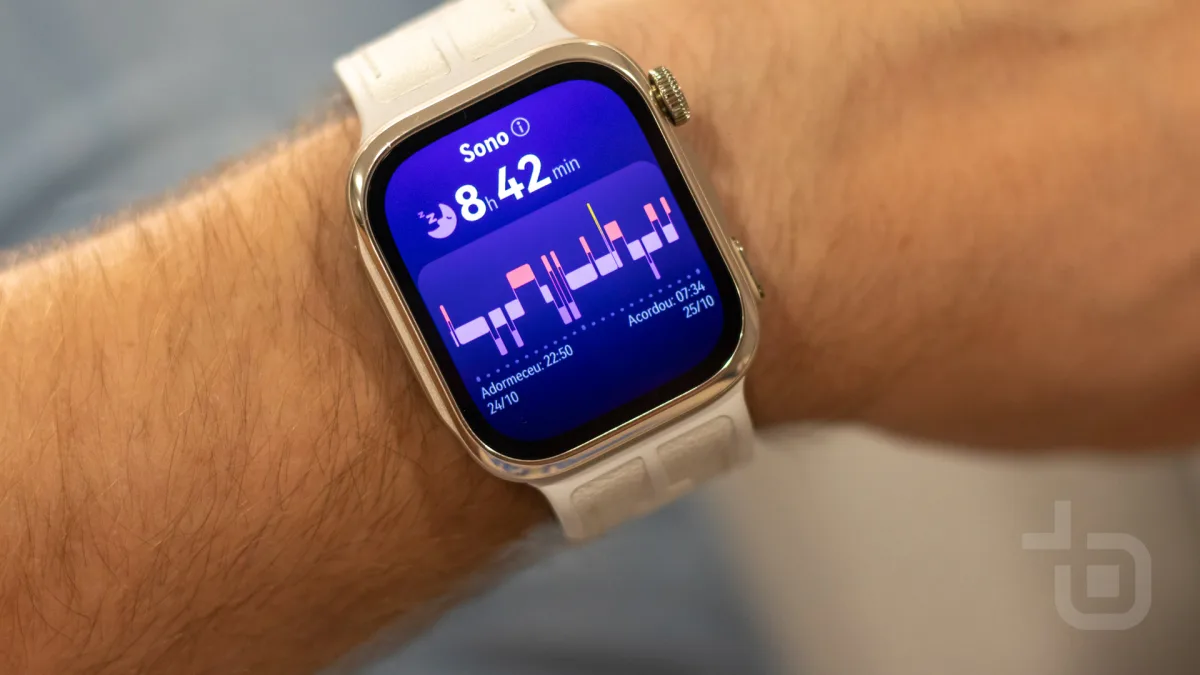
Health Glance has also gained an additional health metric, more emotional states, more detailed sleep monitoring, and two additional blood pressure reminder scenarios.
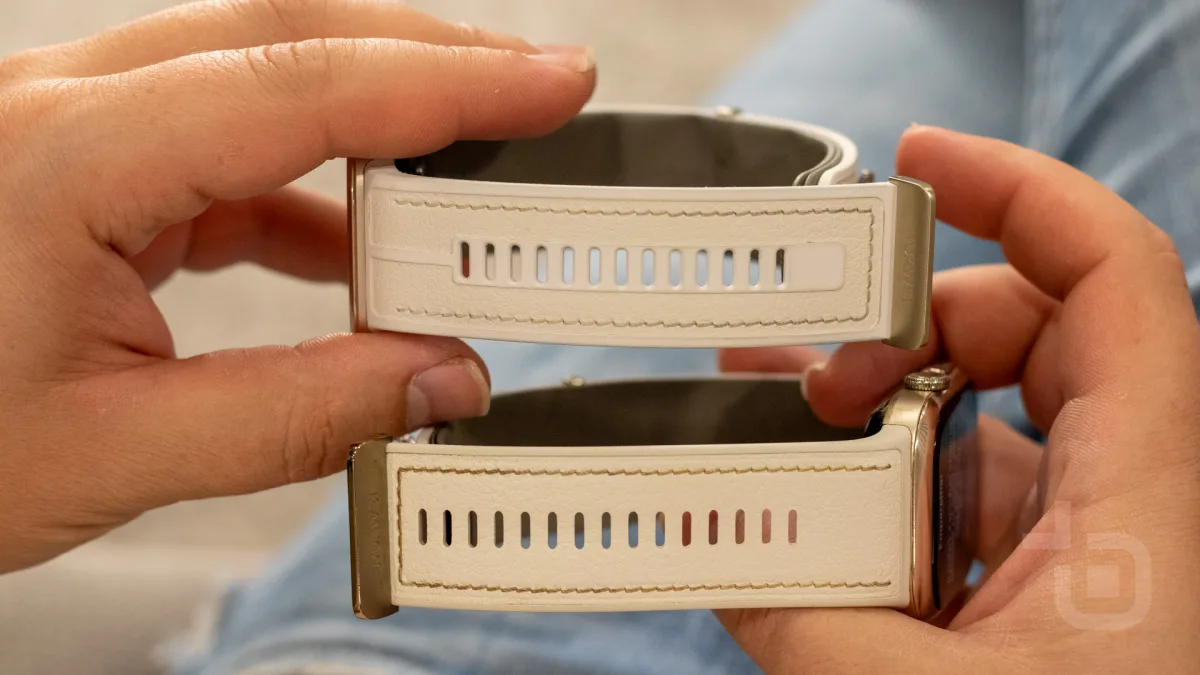
Strap and air cuff
When using the HUAWEI Watch D3 for the first time, it is important to set up the strap correctly for your wrist.
To do this, use the ruler included in the box to measure your wrist diameter. If it is below 11, use the size M strap also included in the box; if it is above 11, leave the size L strap that comes fitted to the watch by default.
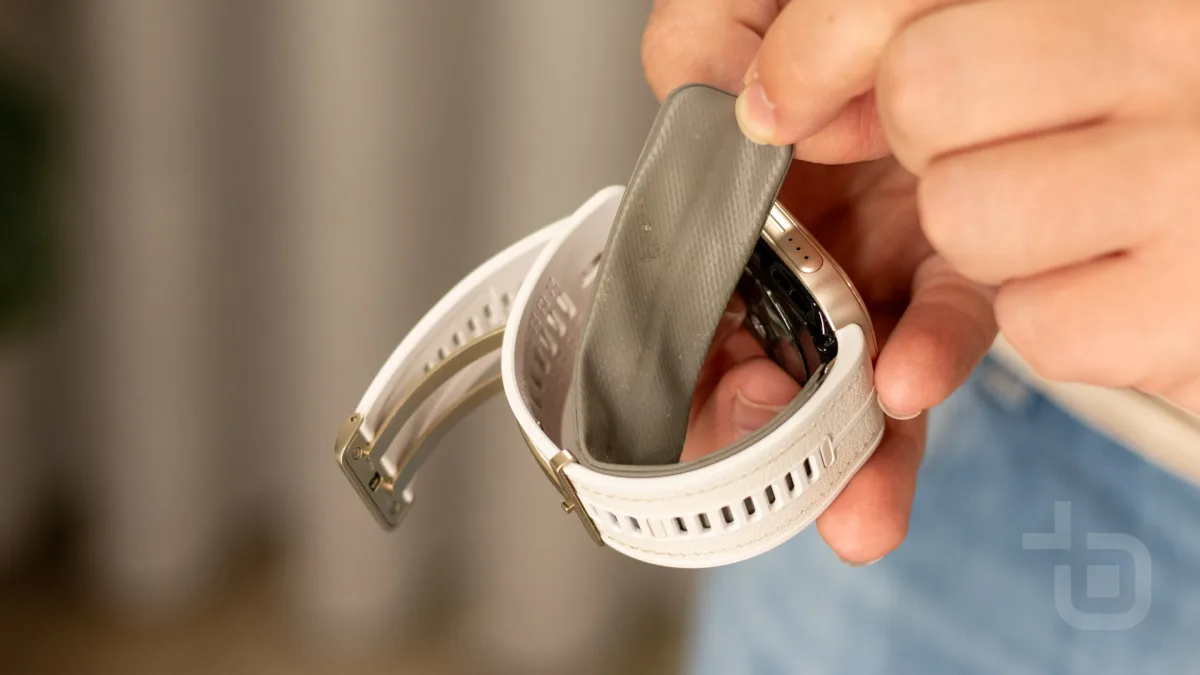
On the strap, position the clasp at the corresponding number.

This sizing process adjusts both the strap and the air cuff to optimise blood pressure readings.
Once the watch is set up — which we will explain next — you should take an initial reading to verify that everything is working correctly.
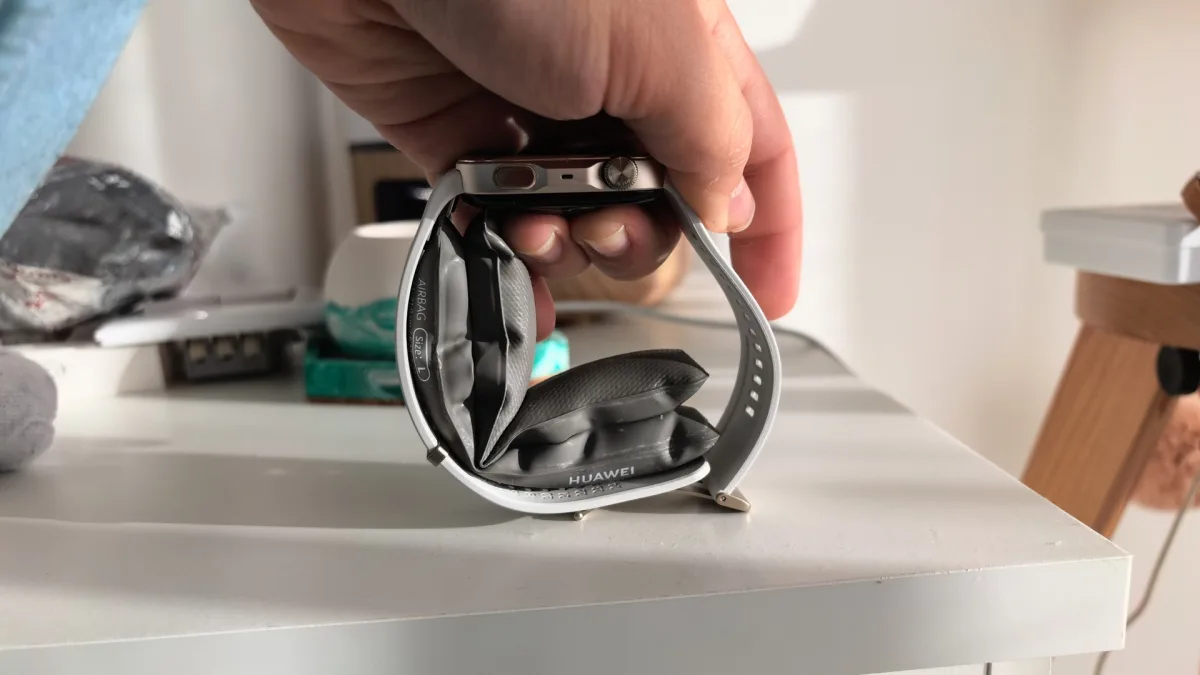
During a reading, you can feel the air cuff inside the strap inflate and apply increasing pressure against the wrist — this is normal for this type of measurement.
Once the reading is complete, the strap deflates and returns to its “normal” state until the next measurement.
HUAWEI Health
The watch is controlled and customised through the HUAWEI Health app, which is compatible with both Android and iOS.
On Android, due to restrictions imposed by the US government, the app must be installed from a third-party store or directly from the HUAWEI website.
When you turn on the watch, it displays a QR code that takes you directly to the download link to make installation easier.
Once the app is installed, go to the devices tab and add a new device — the watch nearby is detected automatically.
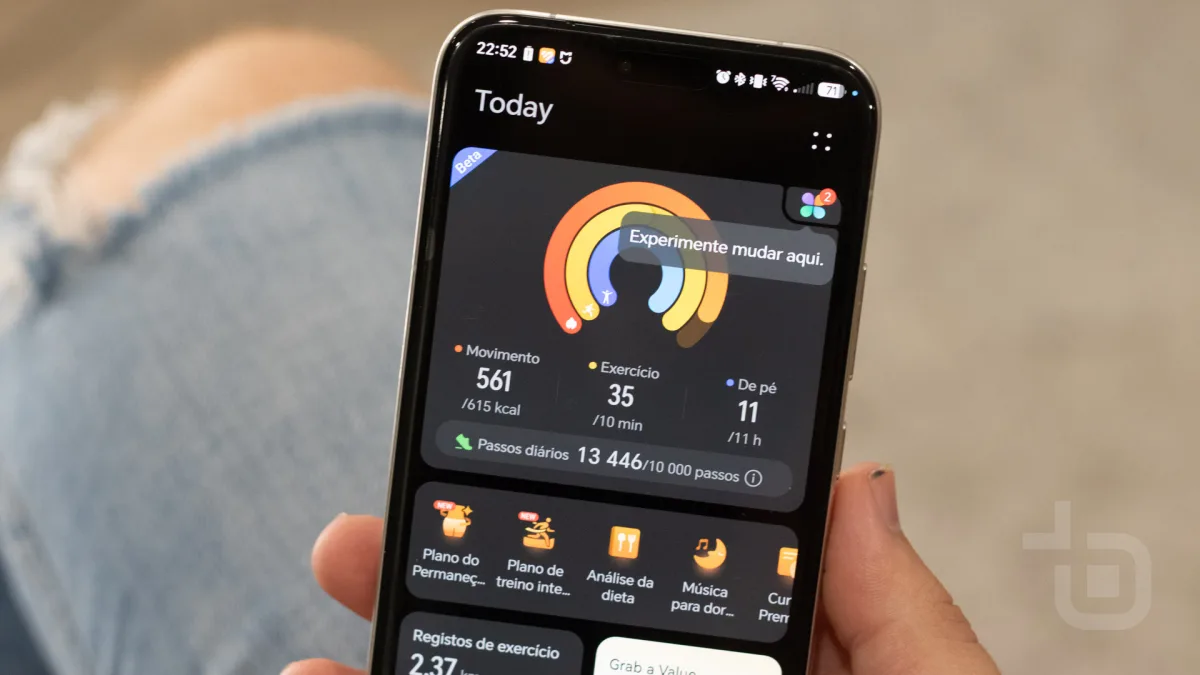
The app is where all health data history is stored and reviewed, with everything categorised and sorted chronologically.
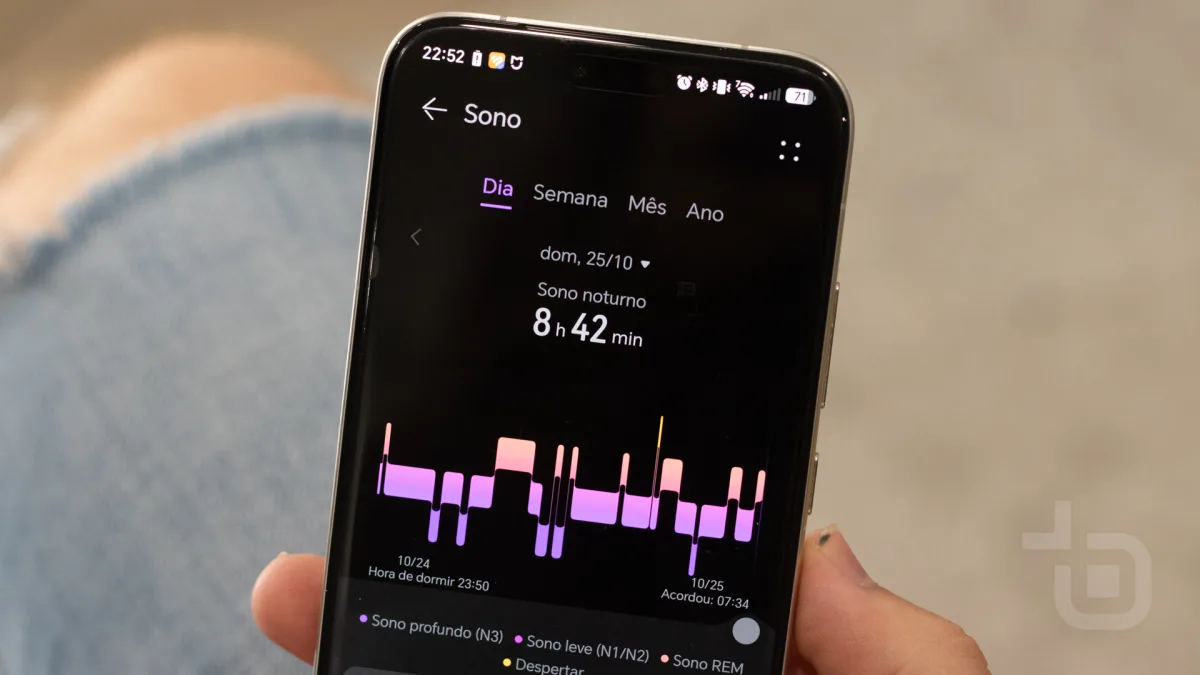
You can also track your exercise history and log workouts, and receive personalised training plans.
In the watch settings, you can download new watch faces, choose which apps send notifications to the watch, install apps from the App Gallery, transfer music from your smartphone, download offline maps, and configure health metric monitoring intervals.
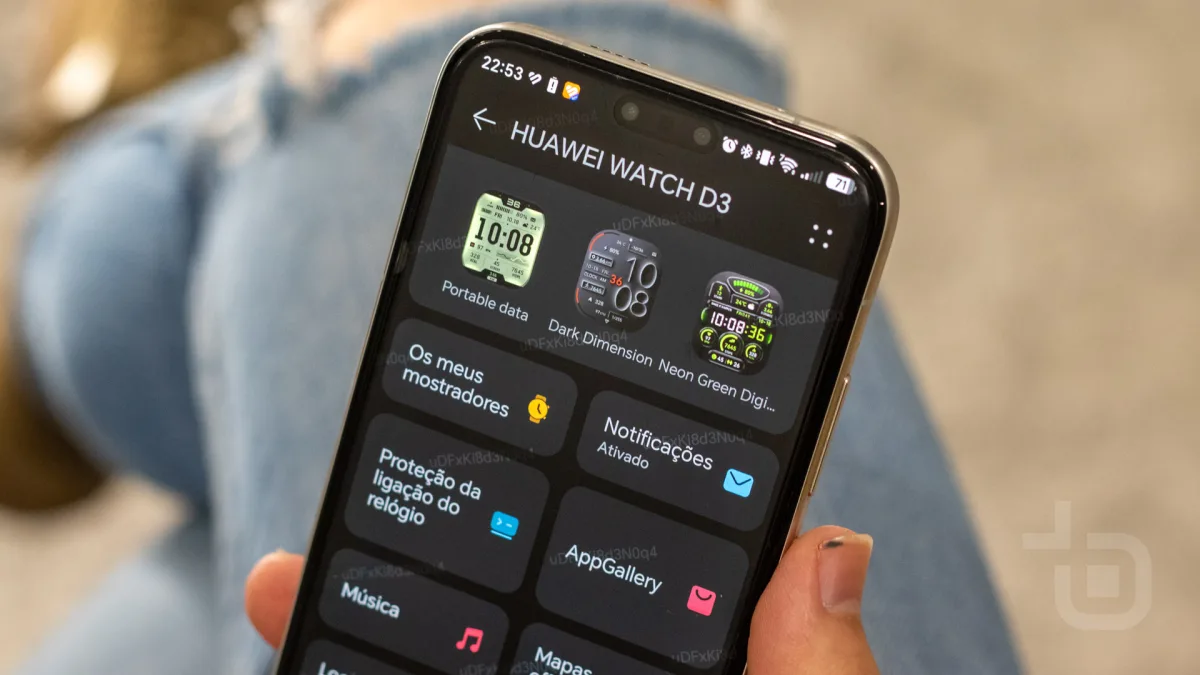
You can also set up SOS emergency contacts to be used in the event of an accident.
The family health community is also configured from within the app.

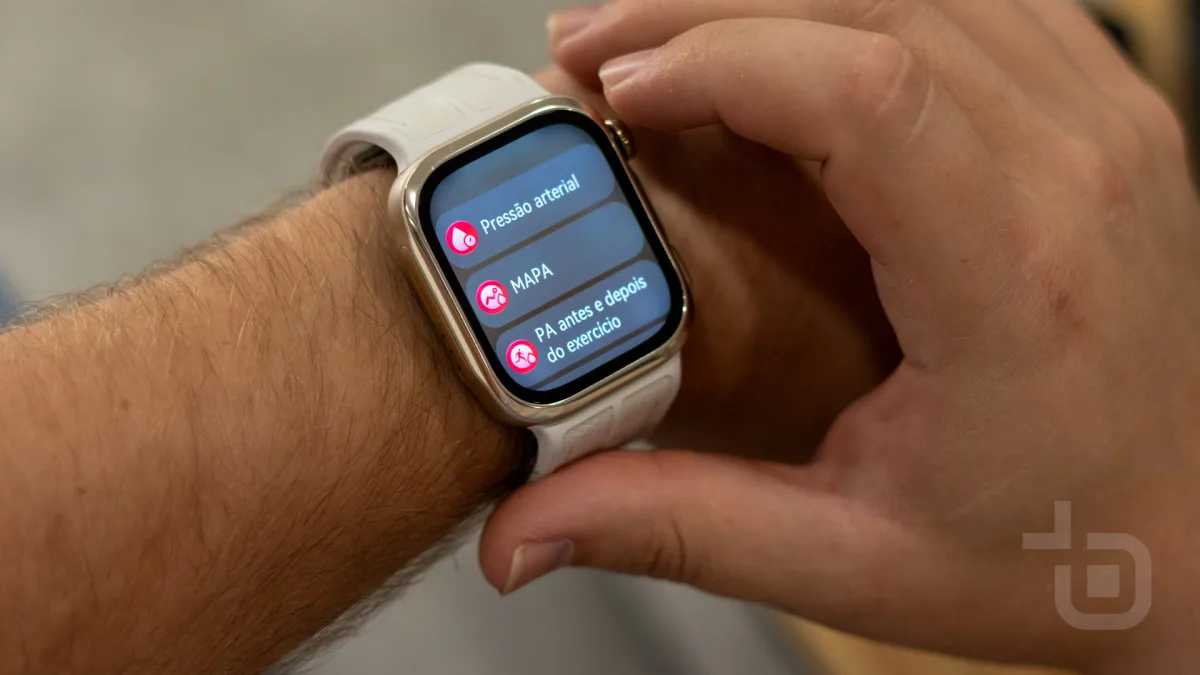
Blood pressure monitoring
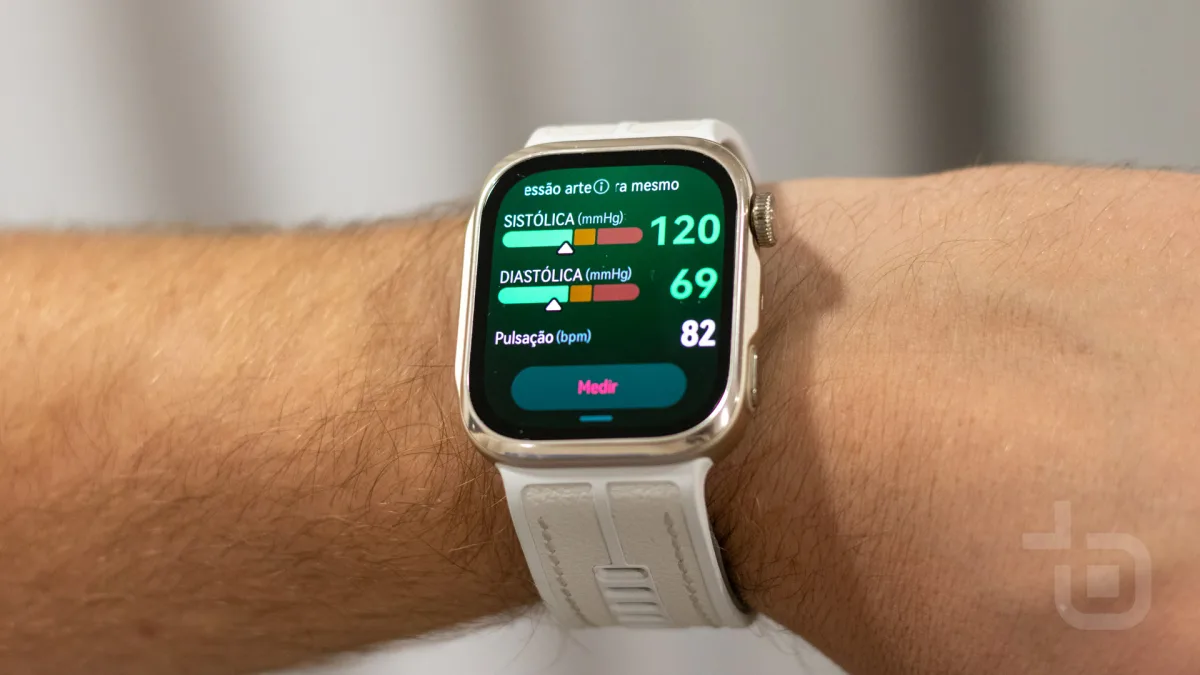
The main focus of this new smartwatch is the ability to monitor blood pressure with medically valid results.
The HUAWEI Watch D3 is the only smartwatch validated in Portugal as a Class IIa medical device with CE 0197 marking, certified for Ambulatory Blood Pressure Monitoring (ABPM) and registered with INFARMED.

In practice, this means the watch can be used to take regular readings directly from the wrist to identify and monitor hypertension.
In addition to manual readings, scheduled measurements can be set up for regular monitoring throughout the day.
For Ambulatory Blood Pressure Monitoring (ABPM) — also widely known as a blood pressure Holter — the watch records readings on a programmed schedule over 24 hours.
By default it follows the recommendations of the European Society of Hypertension (ESH), with readings taken at 30-minute intervals — 20 during the day and seven at night. These values can be adjusted up or down to suit the user’s needs.
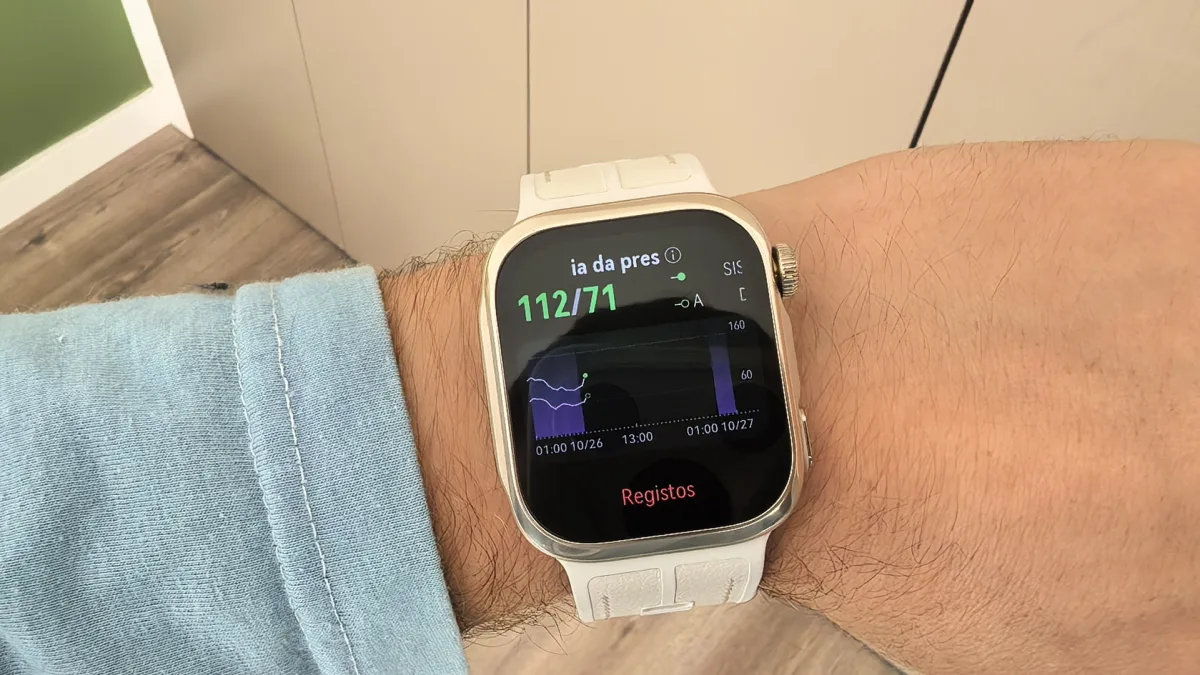
Beyond manual and ABPM modes, the Watch D3 now also supports pre- and post-exercise readings to track blood pressure changes during physical effort, record resting values, and observe how blood pressure responds to and recovers from exercise.
To make readings easier, the HUAWEI Watch D3 automatically detects posture and wrist position, as well as whether the strap is too loose or too tight, providing guidance to help the user get more reliable results.
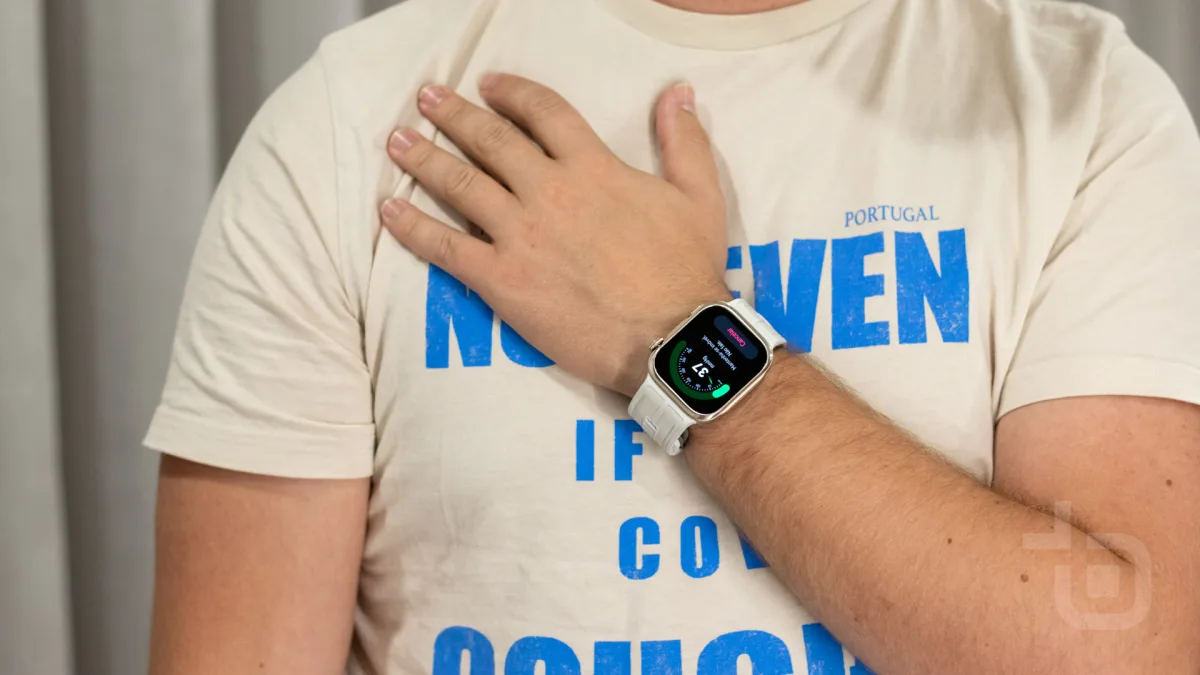
Smart measurement alerts also adapt to daily routines and environmental factors, now including alerts for exposure to high altitudes and sudden temperature changes of 10°C or more.
Each reading takes around 20 to 30 seconds and is very quiet. At night, when ABPM mode is active, you barely notice a reading is taking place.
We should note that the watch supports blood pressure monitoring but does not replace medical consultation.
Health and sport monitoring
Although the focus is firmly on cardiovascular health, the HUAWEI Watch D3 remains a highly capable watch across the rest of its health and sport monitoring features.
On the health side, it can monitor heart rate, SpO2, ECG, mood with new intermediate levels, and sleep quality with apnoea detection.
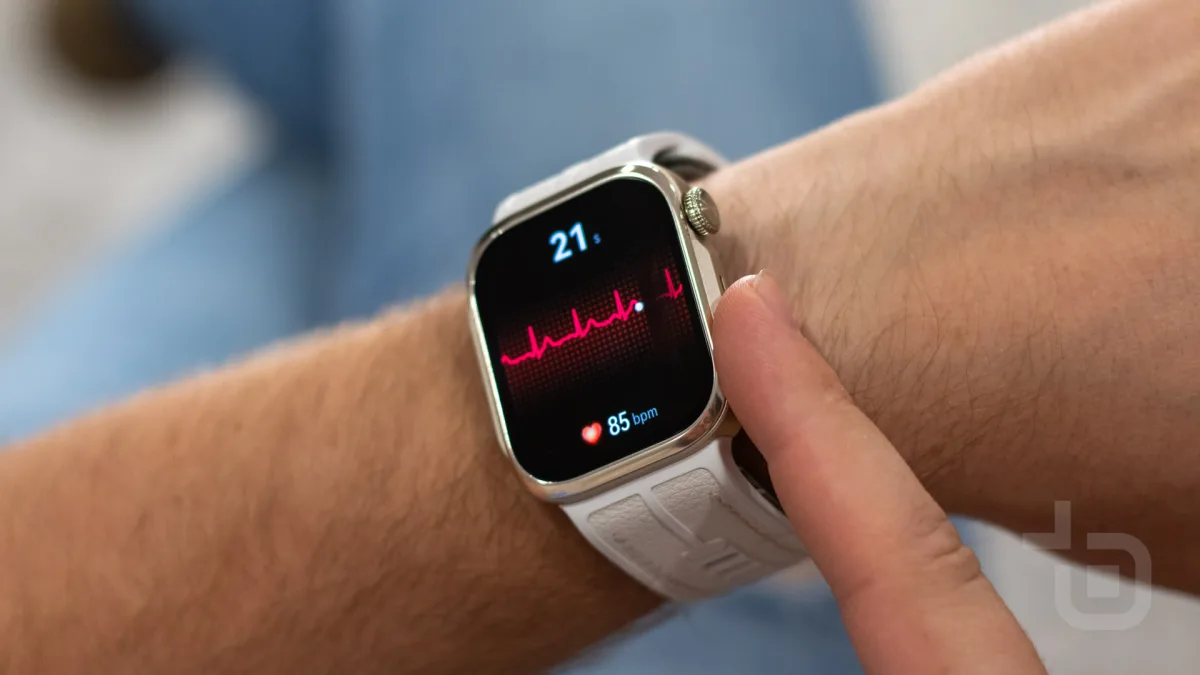
We also now have Health Glance, a new feature in HUAWEI’s watch lineup that performs 11 measurements — heart rate, heart rate variability (HRV), blood pressure, blood oxygen saturation (SpO2), stress, skin temperature, arterial stiffness, arrhythmia detection via pulse, emotional wellbeing, sleep apnoea detection, and an electrocardiogram (ECG).
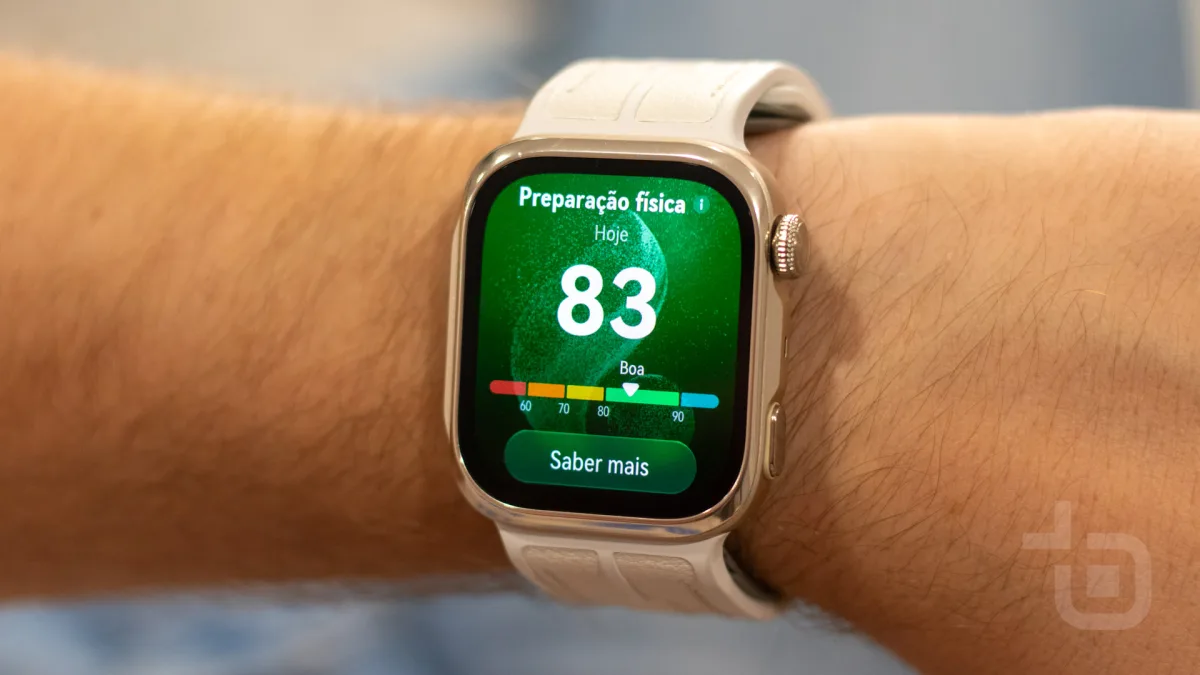
With these measurements, the watch performs a quick general health check-up, assigning a physical readiness score from 0 to 100% to indicate the body’s current physical capacity and recovery state.
On the sport side, it supports over a hundred sports modes, with particular emphasis on golf, cycling, and skiing features — as has become standard in recent HUAWEI watch releases.
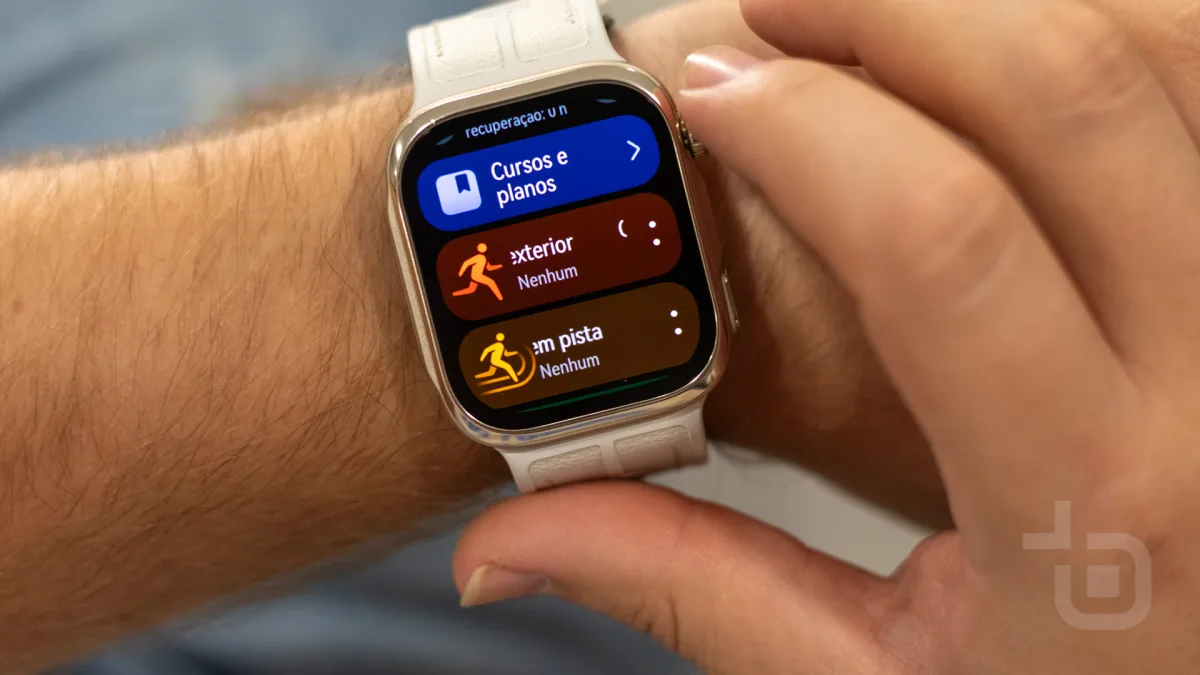
Both sensor readings and GPS are very accurate, enabling detailed tracking of both health metrics and various types of physical activity.
Family health community
A particularly interesting feature that HUAWEI is now exploring is the Family Health Community.
This is a hub where you can register close family members who use a HUAWEI watch to keep track of each other’s health metrics.
As well as being useful for building a shared family or group health record accessible to all members, it is especially valuable for keeping an eye on elderly relatives or people with health conditions.
Through the HUAWEI Health app, you can access the results of various measurements — including cardiovascular data — and receive alerts if any reading falls outside normal ranges.
This helps raise the level of care for those close to you, making it possible to anticipate certain health issues and act in time.
Other smart features
Beyond health and sport, the HUAWEI Watch D3 includes all the other features we have come to expect from HUAWEI.
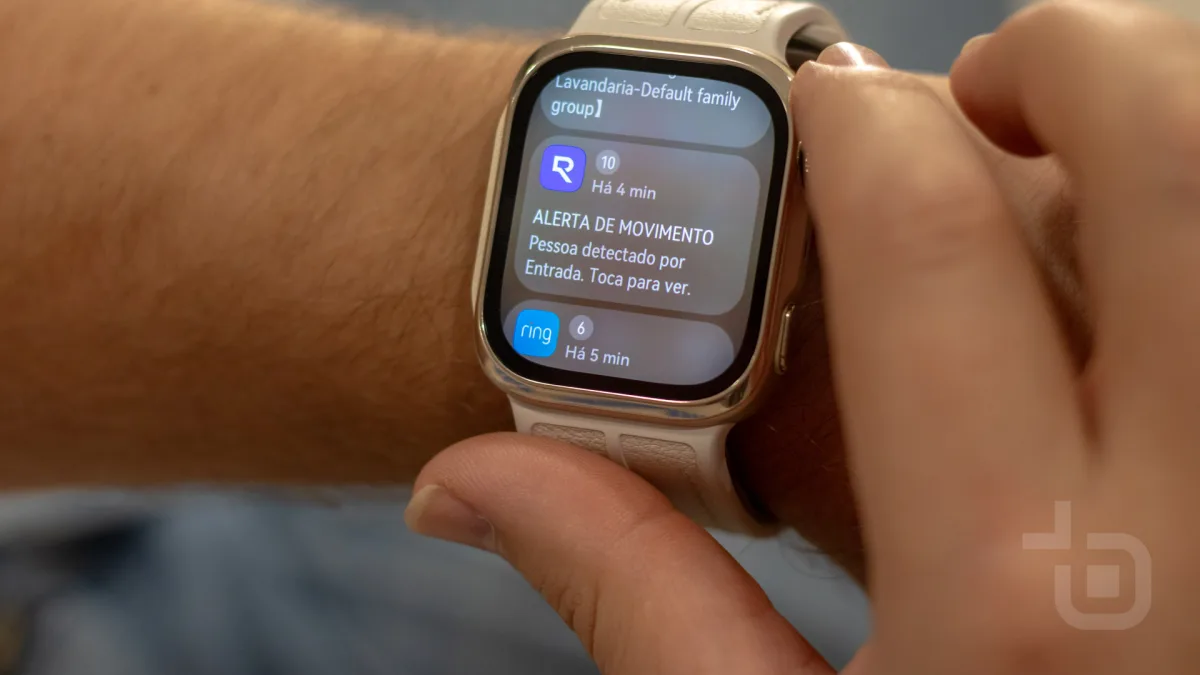
These include Bluetooth calling, notification support, reply via the small on-screen QWERTY keyboard, calendar access, local music playback on the watch, the ability to connect earbuds directly or remotely control the camera.
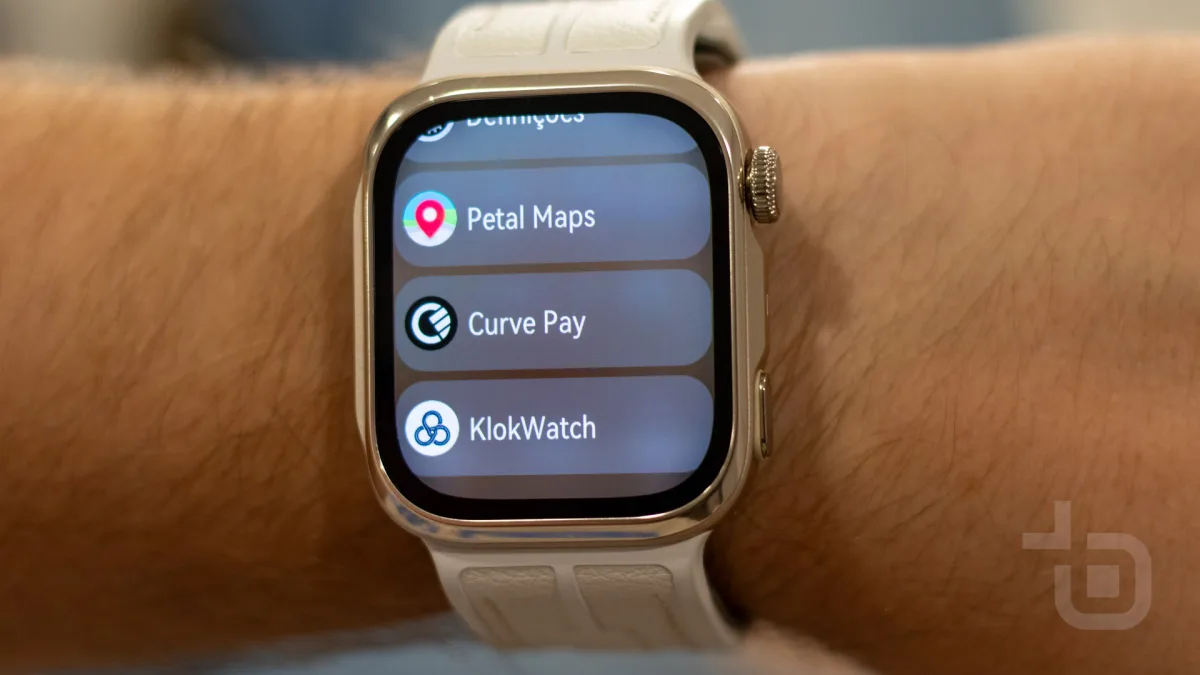
There is also a weather app, calculator, torch, voice recorder, notes, and the option to make contactless payments via Curve Pay.
The HUAWEI Watch D3 also includes an app store, though the selection of genuinely useful applications remains very limited compared to what WearOS offers.
Battery life and charging
In terms of battery life, the HUAWEI Watch D3 continues the brand’s tradition of not requiring a daily charge.
In normal use — with notifications arriving regularly throughout the day, continuous heart rate and SpO2 monitoring, and occasional manual blood pressure readings — we reached the 6 days stated by the brand.
However, with frequent ABPM use or many manual measurements, battery life drops to around 3 days.
Charging is done via a magnetic charger and supports fast charging, allowing enough charge for a full day in just over 5 minutes, with a full charge completed in just over half an hour.
Who is the HUAWEI Watch D3 for?
The HUAWEI Watch D3 is aimed at those who want to monitor their blood pressure regularly without reaching for an arm cuff monitor. It is especially useful for people with hypertension or at risk of developing it, who benefit from frequent readings and continuous tracking throughout the day and night, and for those who keep an eye on the health of older family members through the family health community.
It is also a strong option for those who are generally health-conscious and want, in a single watch, Health Glance, ECG, sleep monitoring, and dozens of workout modes. The discreet design — which does not look like a medical device — makes it a compelling gift idea for parents or grandparents who often resist wearing anything that looks clinical.
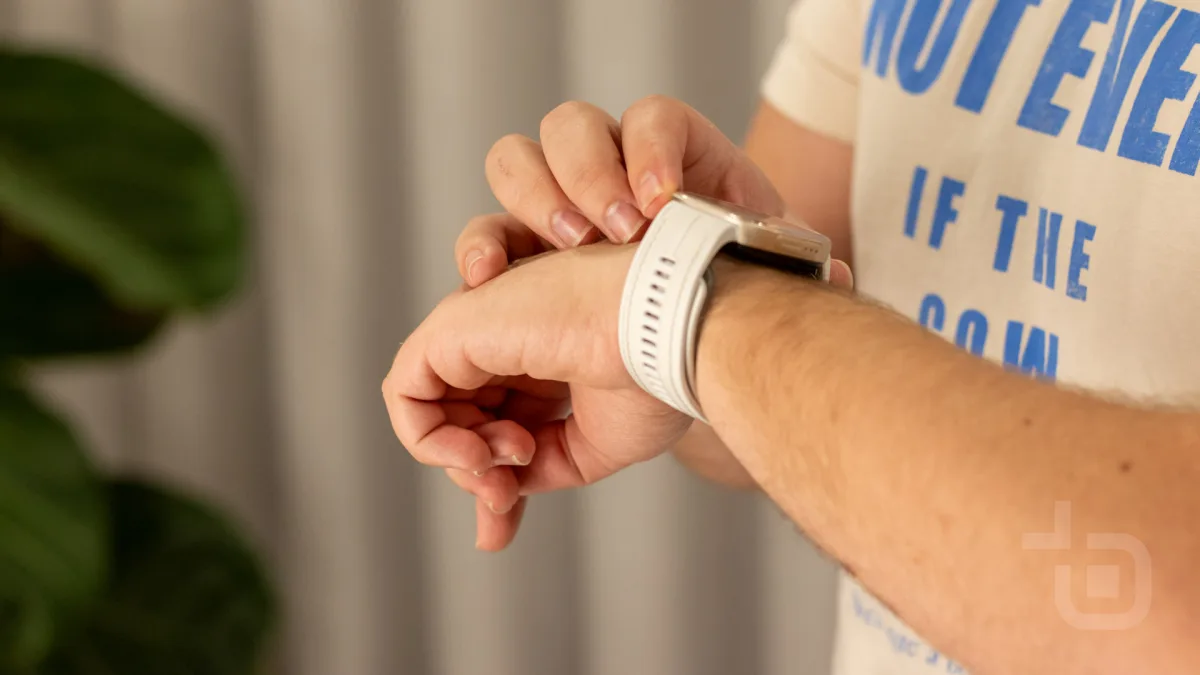
It is not the best choice for those who want the widest app selection, as the store remains limited compared to WearOS. Android users will also need to install the HUAWEI Health app outside the Play Store. And anyone who wants an ultra-slim, discreet watch may find it slightly bulky due to the built-in air cuff.
It is worth noting that the watch supports blood pressure monitoring and does not replace medical consultation.
Verdict
The HUAWEI Watch D3 is a smartwatch whose value lies above all in its blood pressure measurement capability.
The air cuff integrated into the strap allows quick, silent readings in around 20 to 30 seconds, and the 24-hour ambulatory monitoring mode — which is barely perceptible at night — is the feature that most sets it apart from the competition. Pre- and post-exercise measurements and reminders that adapt to temperature and altitude add genuine practical value.
Compared to the D2, the improvements are clear: it is 9 grams lighter, 2 mm thinner, and has a larger display with double the brightness. Health Glance, the family health community, and more detailed sleep monitoring complete a very comprehensive health offering, without sacrificing the brand’s other familiar features.
Battery life on the HUAWEI Watch D3 is good, at around 6 days in normal use, though this drops to around 3 days with frequent ambulatory monitoring or many manual readings.
The less positive points are the limited app store and the need to install the app outside the Play Store on Android. The design, while lighter, remains slightly bulky and was perceived by some as more feminine.
At €449, the HUAWEI Watch D3 is a solid proposition for those who prioritise cardiovascular health monitoring and want to do so in a practical and discreet way.
Techbit thanks HUAWEI for providing the Huawei Watch D3 for review.

- Medically validated wrist blood pressure measurement
- Ambulatory Blood Pressure Monitoring (ABPM) support
- Comfortable to wear
- HUAWEI Health app not available on the Play Store
- Limited app selection in the app store
HUAWEI Watch D3 FAQ
What is the HUAWEI Watch D3?
It is a smartwatch with an air cuff built into the strap that measures blood pressure at the wrist, with CE MDR certification as a medical device for this function. It also includes ECG, Health Glance, sleep monitoring, and over a hundred workout modes. It is available for €449.
Does the HUAWEI Watch D3 really measure blood pressure?
Yes. Rather than estimating blood pressure using optical sensors, it uses a small air pump and an inflatable cuff that compress the wrist in a similar way to a traditional blood pressure monitor.
What is Ambulatory Blood Pressure Monitoring (ABPM)?
ABPM — also widely known as a blood pressure Holter — is a programmed recording over 24 hours. By default, the watch takes readings every 30 minutes, with 20 daytime and 7 night-time readings, values that can be adjusted.
Does the watch replace medical consultation?
No. The HUAWEI Watch D3 supports blood pressure monitoring but does not replace medical consultation.
How long does a reading take?
Around 20 to 30 seconds, and it is very quiet.
What is the battery life of the HUAWEI Watch D3?
Around 6 days in normal use. With many manual readings or frequent use of ambulatory monitoring, this drops to around 3 days.
Does the HUAWEI Watch D3 work with Android and iPhone?
Yes. On Android, the HUAWEI Health app must be installed from a third-party store or directly from the Huawei website.
What is the price of the HUAWEI Watch D3?
It is available in Portugal for €449.
Sobre o autor

Aproveite a campanha:


