
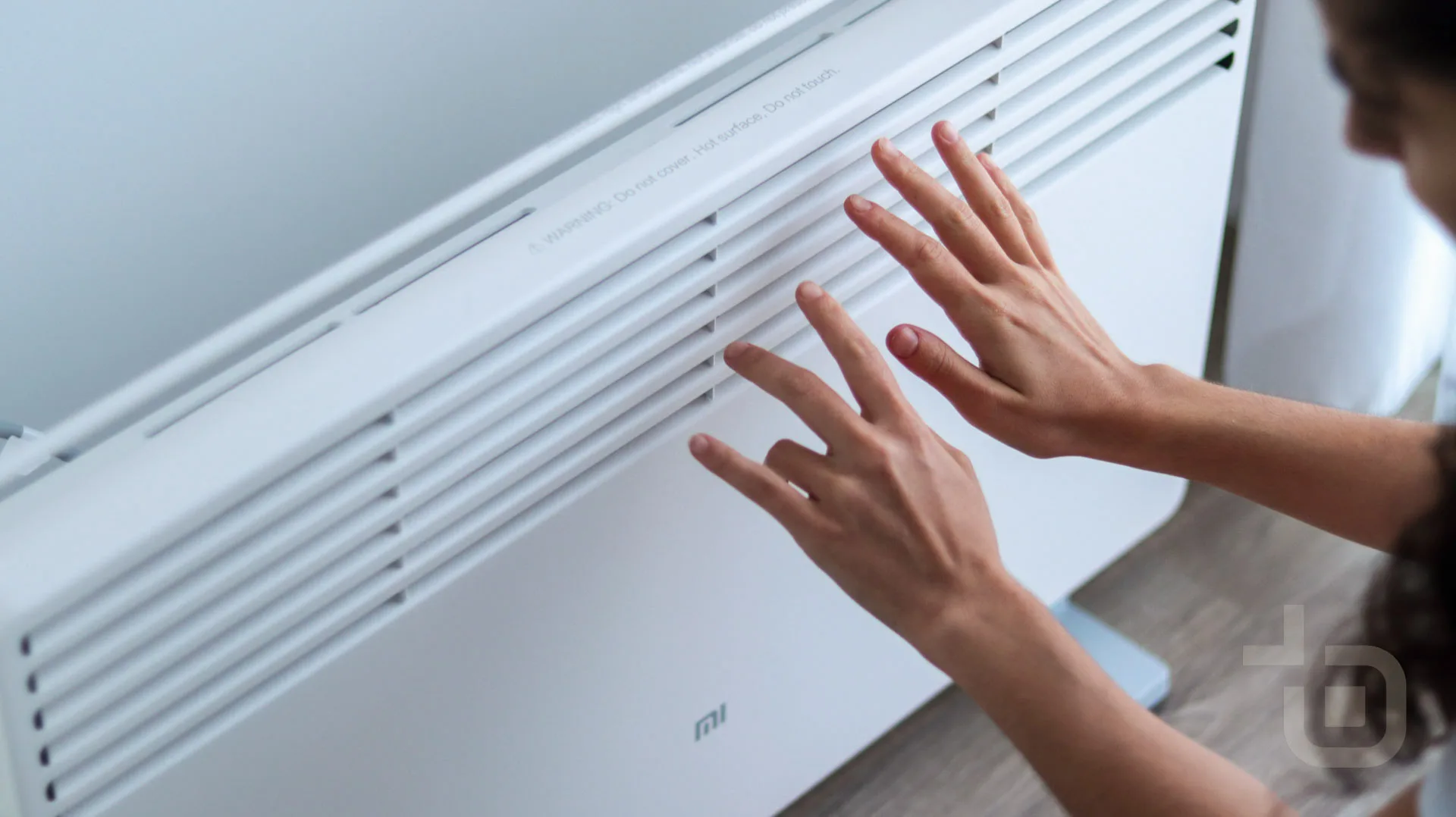
The cold is already making itself felt in the mornings and evenings, and it is at this time of year that many people discover their living room takes too long to warm up or that the bedroom never really gets comfortable.
An electric heater is the simplest way to sort out a specific room without any building work or installation, but the variety of models, wattages, and technologies makes the choice less straightforward than it seems.

In this guide we explain the differences between the main types of heater, how to estimate running costs, and what precautions to take. We have also included 7 models from Xiaomi, Smartmi, Orbegozo, and Blaupunkt, priced between €36.58 and €120.97, organised by the room where they make the most sense, so you can quickly find the one that suits your home best.
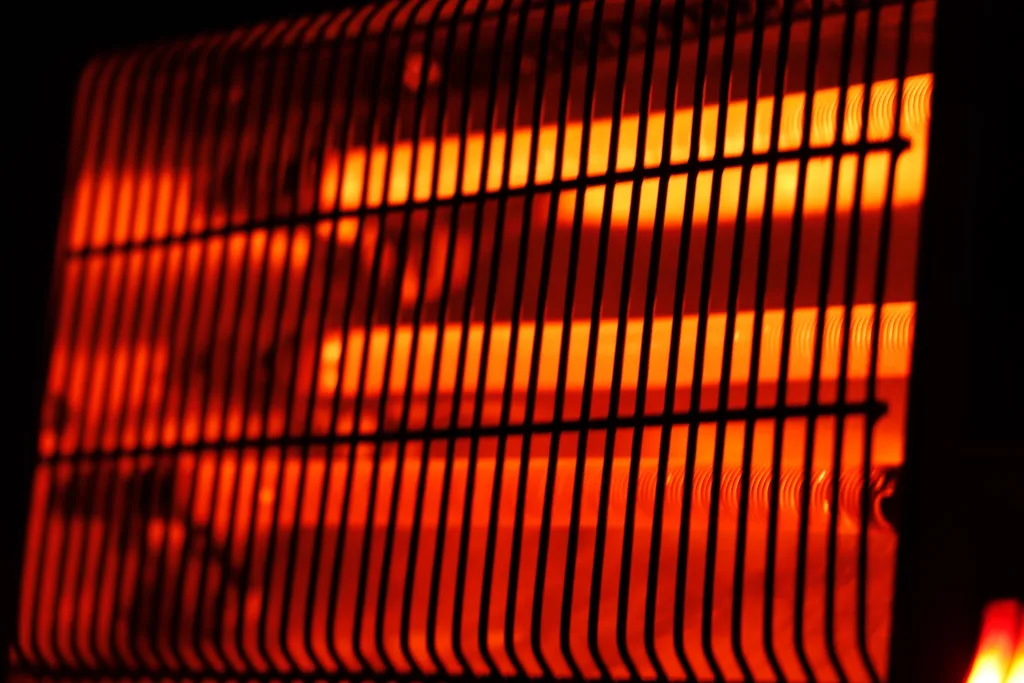
Fan heater, convector, or radiator — which should you choose?
Fan heaters use a ceramic element and a fan that pushes warm air into the room.
They heat up quickly and take up little space, so they work well for occasional use — such as warming an office before you start work — but the fan does make some noise and the heat disappears almost as soon as the unit switches off.
Convectors heat the air that passes through the unit and distribute it by natural convection, often without a fan. They are quiet and well suited to anyone spending long hours in the same room, such as a living room or bedroom, and the thermostat keeps the temperature stable.
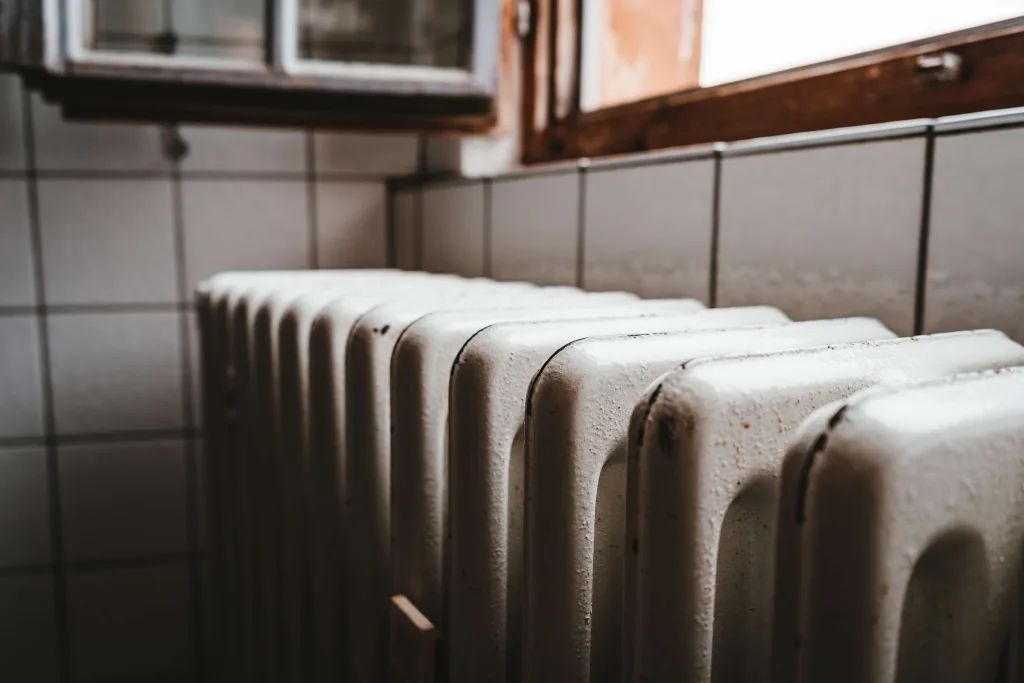
Oil-filled and mica radiators take a little longer to start heating, but release a gentler, more consistent warmth and, in the case of oil-filled models, the unit stays warm after being switched off.
In all cases, the wattage should match the size of the room. As a rule of thumb, allow around 100 W per square metre in a reasonably well-insulated home, and less if the room is small and well insulated. Choosing models with a thermostat and multiple power settings helps avoid heating more than necessary.
Convectors — quiet heat for the living room, bedroom, and bathroom
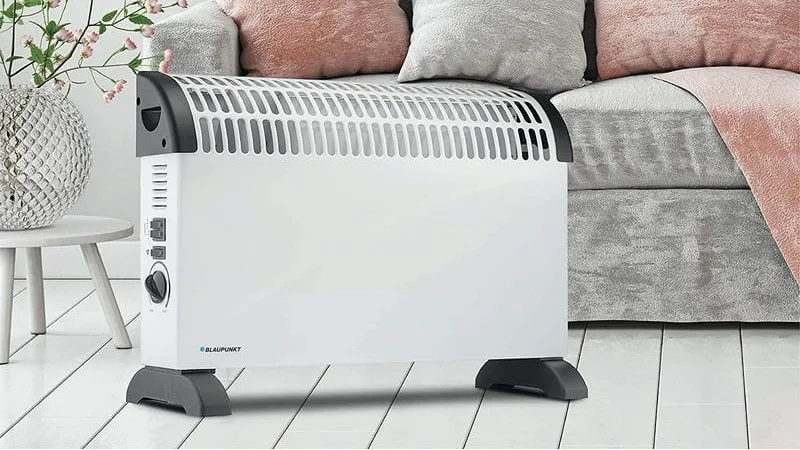
Convectors heat the air that passes through the unit and distribute it by natural convection, often without a fan.
They are quiet, create no draughts, and keep the temperature stable thanks to the thermostat, making them the most versatile choice for rooms where you spend long stretches of time.
They work well in the living room in the evenings and in the bedroom at night, especially models with a timer. In the bathroom, only models with IPX4 splash protection should be used, and even then always well away from the shower and bath.
The Blaupunkt BP1008 is the most affordable entry point on the list, at €36.58. It is a 2,000 W convector with three power settings — 750 W, 1,250 W, and 2,000 W — an adjustable thermostat, carrying handles, and overheat protection. It also has a fan-only mode, and the spec sheet suggests it for offices, bedrooms, and other domestic rooms. As it does not mention moisture protection, we would not recommend it for the bathroom.
A step up, the Smartmi Convector Heater 1S costs €70.13 and combines 2,200 W with fanless operation. It has three power settings (900 W, 1,300 W, and 2,200 W), temperature control between 16 and 28 degrees via two internal sensors, a temperature and humidity display, a shut-off timer, and child lock. It cuts the power if it tips over or overheats, and has IPX4 splash protection, making it suitable for the bathroom as well. It measures 694 × 448 × 202 mm.

For anyone who wants to control everything from their phone, the Xiaomi Mi Smart Space Heater S is available for €120.97. It is a 2,200 W convector that connects via Wi-Fi to the Mi Home app, works with Google Assistant and Alexa, and lets you choose from six temperatures between 18 and 28 degrees, plus a 1, 3, 5, or 12-hour timer.
You can schedule it to warm the bedroom before you go to bed and switch itself off during the night. It has no fan, has IPX4 protection, and the spec sheet suggests it for spaces up to 46 m², although in practice the insulation of your home has a significant bearing on that figure. It weighs 5.7 kg and has side handles and rounded corners.
Oil-filled and mica radiators — slow, steady heat for the bedroom and home office
Oil-filled and mica radiators take a little longer to start heating, but they release a gentle, consistent warmth without blowing air.
In the case of oil-filled models, the unit stays warm after being switched off. This makes them ideal for the bedroom, where you want stable, quiet heat through the night, and also for a home office where you spend the day seated and do not want draughts.
The Blaupunkt BP1009 is a 7-fin oil-filled radiator with a maximum output of 1,500 W priced at €42.59. It has an adjustable thermostat, a thermal fuse that switches it off if the temperature is exceeded, tip-over protection, an indicator light, and a cable tidy for easy storage. It comes with a carrying handle and swivel castors, making it simple to move from room to room.

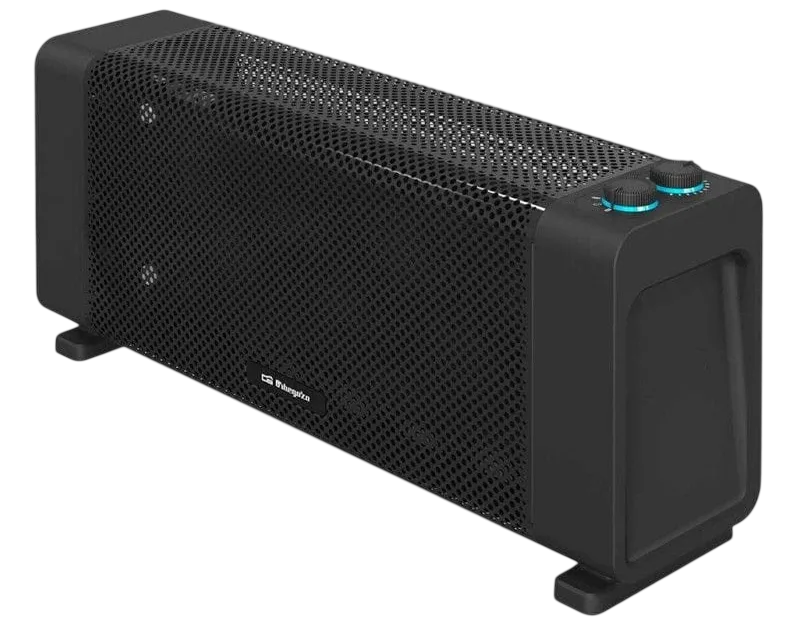
The Orbegozo RMB 1500 is a mica radiator priced at €65.98 with a low, wide profile — 64 cm wide and 29.5 cm tall — finished in black. It runs at 750 W or 1,500 W, has an adjustable thermostat, overheat protection, and a tip-over cut-off and, according to the brand, starts releasing heat in around a minute. It is easier to store than an oil-filled radiator and sits neatly against the wall without taking up much height.
Fan heaters — for quickly warming a small space
Fan heaters use a ceramic element and a fan that pushes warm air into the room. They heat up quickly and take up little space, but the fan does make some noise and the heat disappears almost as soon as the unit switches off. They are the right choice for occasional use — warming an office before you start work, taking the chill off a cold corner in the morning, or heating the bedroom for a few minutes before you go to bed.
The Xiaomi Fan Heater costs €46.72 and is the simplest option for anyone who wants quick heat in a small or medium-sized space. It has 2,000 W of output, ceramic plates, and four modes — two speeds of hot air and two of warm air at 1,200 W.
The airflow angle is 70 degrees, noise does not exceed 45 dB, it weighs 2.2 kg and stands 47 cm tall, making it easy to move between rooms. The buttons are on the top — one to switch mode and one to adjust the temperature — and it includes overheat protection and flame-retardant materials.
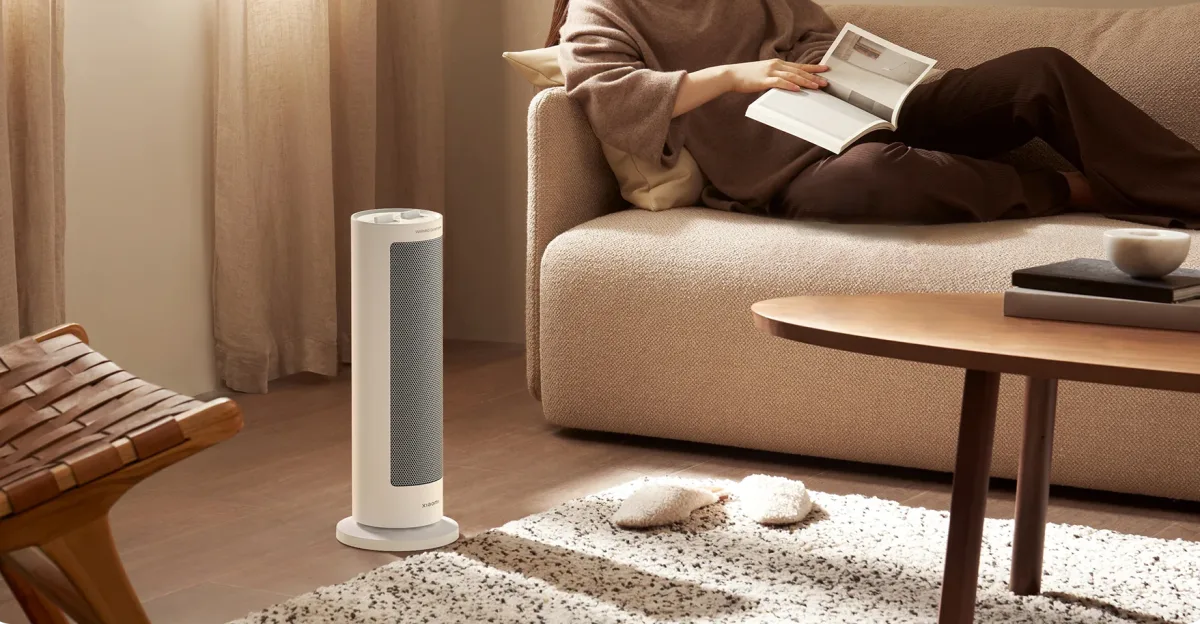
For those who place more importance on quiet operation and comfort, the Smartmi Smart Fan Heater is available for €100.59. It is a tower heater with PTC ceramic heating that runs at 1,200 W or 2,000 W and reaches just 35.6 dB — a low figure for a fan heater.
It has a 90-degree oscillation mode, a 1, 2, 4, or 8-hour timer, and a 2.4 GHz remote control that does not need to be pointed directly at the unit — handy for switching it on and off without leaving the sofa or bed. It switches itself off if it tips over or overheats, and weighs 4 kg.

What wattage should you choose, and how much does it cost to run a heater?
The wattage should match the size of the room. As a rule of thumb, allow around 100 W per square metre in a reasonably well-insulated home, and less if the room is small and well insulated. Choosing models with a thermostat and multiple power settings helps avoid heating more than necessary.
Running cost is calculated by multiplying the output in kW by the hours of use and the price per kWh. A 2,000 W appliance uses 2 kWh per hour at full power, which at €0.20 per kWh (an illustrative figure only) works out at around €0.40 per hour.
In practice, the thermostat switches the element off once the room reaches the target temperature, so actual consumption is usually lower than the maximum, and keeping doors and windows closed helps reduce running time.
How to use a heater safely
It is best to plug the heater directly into a wall socket rather than an extension lead or multi-plug adapter, as outputs of 1,500 to 2,200 W place considerable demands on the wiring.
Never cover the unit or drape clothes over it, and keep it well away from curtains, sofas, and other flammable materials.
In the bathroom, only models with appropriate moisture protection — such as IPX4 — should be used, always well away from direct water and in accordance with the manual.
Frequently asked questions about electric heaters
What is the best electric heater for a bedroom?
Fanless convectors with a timer and oil-filled or mica radiators are the best choices, as they are quiet and provide stable heat through the night. If you only want to warm the room before going to bed, a small fan heater will do the job more quickly.
What is the best heater for a living room?
A convector, because it runs silently, creates no draughts, and keeps the temperature stable during the hours you are sitting in the room. Models with multiple power settings let you adjust the output to suit the size of the room.
How much electricity does a 2,000 W heater use?
It uses 2 kWh for every hour it runs at full power. Actual consumption is usually lower, because the thermostat switches the element off once the room reaches the target temperature.
Does an oil-filled radiator save more energy than a convector?
Not necessarily. All electric heaters convert electricity into heat at a similar efficiency, and the difference lies in how quickly they warm up and how they release that heat. What has the greatest impact on your electricity bill is the wattage you choose, the hours of use, and the quality of the thermostat.
Can I use a heater in the bathroom?
Only if the model has appropriate moisture protection, such as the IPX4 rating on the Smartmi Convector Heater 1S and the Xiaomi Mi Smart Space Heater S, and even then it should be kept well away from the shower and bath. Always check the manual before installing it.
Can I leave a heater on overnight?
The safest approach is to use a unit with a thermostat, a timer, and automatic cut-off for tip-over and overheating, and to make sure nothing is covering it. Where possible, it is best to avoid leaving it running unnecessarily while you sleep.
Can I plug a heater into an extension lead?
It is not advisable. Heaters draw a lot of current and extension leads or multi-plug adapters can overheat, so the best approach is to plug the unit directly into a wall socket.
Sobre o autor

Aproveite a campanha:


